


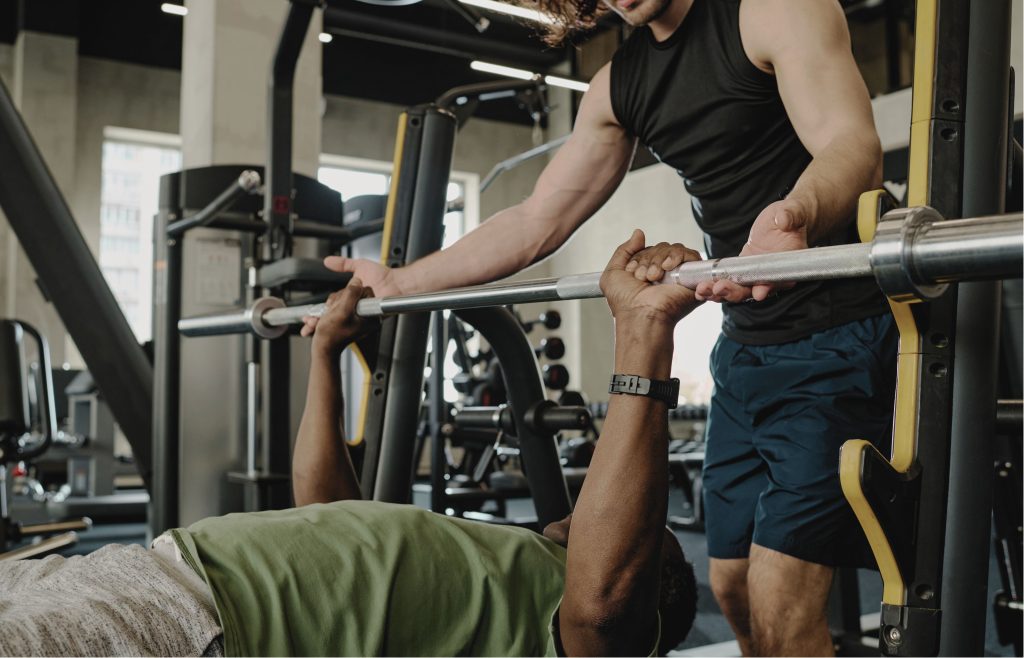
 Gym anxiety affects millions of people but it doesn’t have to stop you from building strength, confidence, and consistency.
Key Takeaways
- Gym anxiety (also called “gymtimidation”) affects an estimated 50% of gym-goers, making it one of the most common barriers to starting a fitness routine.
- Anxiety is strongest in the first 4-6 weeks. Getting through that window is the most important thing you can do.
- Having a written plan before you walk through the gym door reduces decision paralysis and keeps workouts focused and efficient.
- Fitbod users who follow a structured in-app plan complete an average of 3.2 workouts per week, nearly double the industry average for unstructured gym-goers.
- Knowledge, routine, and community are the three pillars that dismantle gym anxiety for good.
What Is Gym Anxiety (and Why Is It So Common)?
You’ve paid for the membership. You’ve packed your gym bag. You’re sitting in the parking lot for the third time this week and you drive home again without going in. If that sounds familiar, you’re not alone.
Gym anxiety, often called “gym-timidation,” is the social anxiety and self-consciousness people experience in gym environments. It often shows up as fear of being judged for your body, technique, fitness level, or choice of weights.
According to Fitbod’s 2022 year in review, 50% of gym members have felt intimidated at the gym, and that number climbs to 65% among new gym-goers in their first three months.
The irony is frustrating: the gym is one of the best tools for improving physical and mental health, yet anxiety keeps millions of people from accessing those benefits.
Research published in the Journal of Applied Sport Psychology found that social physique anxiety, the fear of how your body is evaluated in exercise settings, is a major predictor of gym avoidance, especially among women and beginners.
The good news? Gym anxiety is not a personality flaw. It’s a conditioned response to an unfamiliar environment, and like all conditioned responses, it can be unlearned.
The strategies below are grounded in behavioral psychology, exercise science, and real-world experience from millions of gym-goers who made it past that parking lot.
1. Show Up With a Plan
The biggest mistake new gym-goers make is walking in without knowing what they’re going to do. Without a plan, you default to whatever feels safest or most familiar, usually wandering between machines or staying on the treadmill. That uncertainty fuels anxiety fast.
A written workout plan eliminates decision paralysis before it starts. Instead of improvising, you walk in knowing:
“Today I’m doing squats, Romanian deadlifts, and dumbbell rows.”
The gym becomes an execution environment instead of an audition. Apps like Fitbod help by generating personalized strength-training programs based on your goals, experience level, and available equipment. Every workout includes step-by-step exercise instructions and demo videos, so you know exactly what to do before you step onto the gym floor. Before your next workout, write down:
- Exercises
- Sets
- Reps
- Target weights
Even a simple Notes app checklist is enough to reduce mental overload, or start a free trial with Fitbod and we’ll recommend the workouts for you, and show you how to do them.
2. Learn the Equipment Before You Need It
The squat rack feels intimidating the first time. Cable machines can look impossibly complicated. Even the Smith machine can feel confusing when you’re new. Equipment unfamiliarity is one of the biggest drivers of gym anxiety because confusion feels visible and visible confusion can trigger fear of judgment.
The solution is simple: exposure before pressure.
Try This:
- Download the Fitbod app and watch our How-To videos for each exercise in your gym before your session.
- Practice during off-peak hours when fewer people are around.
- Ask a staff member for a quick orientation.
The first use feels awkward. The second feels familiar. By the third, it’s routine.
3. Start at Off-Peak Hours
Gym anxiety increases when the gym is crowded. Fewer people means fewer perceived eyes on you, which makes it easier to focus and learn.
Typical Gym Traffic Patterns
| Time Window | Crowd Level |
|---|---|
| 5:00–7:00 AM | Low to Moderate |
| 7:00–9:00 AM | Peak |
| 11:00 AM–1:00 PM | Moderate |
| 5:00–8:00 PM | Peak |
| 8:00–10:00 PM | Low |
Best Times for Beginners
- Weekday mornings before 7 AM
- Late evenings after 8 PM
Starting during quieter hours gives you space to:
- Learn equipment
- Practice your program
- Build confidence without feeling rushed
After 20-30 sessions, crowd size starts to matter less and less because routine starts to overpower anxiety.
4. Dress for Confidence, Not Performance
What you wear affects how you feel. You do not need expensive gym clothes. You need clothes that fit comfortably, allow for movement, and make you feel confident.
Research on “enclothed cognition” shows that clothing impacts confidence, mindset, and performance.
Practical Tips:
- Prioritize fit over brands.
- Wear flat-soled shoes for lifting.
- Invest in one outfit you genuinely feel good wearing.
Confidence is easier to build when you’re physically comfortable.
5. Use Headphones as Your Force Field
Put your headphones in the moment you walk through the door. Headphones create an invisible boundary that helps reduce social anxiety and improve focus.
They can help by:
- Narrowing attention to your workout
- Reducing overthinking between sets
- Increasing motivation and workout intensity
Research shows music can improve strength output and reduce perceived effort during exercise.
Playlist Tip: For strength training, aim for music around 120–140 BPM to maintain energy and momentum.
6. Focus on Progress, Not Perfection
One of the biggest cognitive distortions behind gym anxiety is the belief that everyone is watching you. They’re not. Psychologists call this the “spotlight effect” which means our tendency to dramatically overestimate how much other people notice us. The person next to you is almost always thinking about their own workout, not yours.
Shift Your Focus
Instead of asking: “Do I look like I belong here?” Ask: “Am I improving compared to last month?”
Tracking workouts, weights, and personal records gives you objective proof of growth, which helps drown out anxiety. Small progress compounds fast.
7. Find an Anchor Exercise
An anchor exercise is one movement you feel confident doing no matter what. For beginners, this could be:
- Goblet squats
- Push-ups
- Dumbbell bench press
- Lat pulldowns
Start every session with that movement.
This is an effective strategy because:
- Anxiety is highest at the beginning of workouts.
- Early success builds momentum.
- Confidence from one exercise often carries into the rest of the session.
Over time, that anchor exercise reinforces a powerful identity shift:
“I’m not someone trying to go to the gym. I’m someone who works out.”
8. Lean on Technology to Close the Knowledge Gap
Most gym anxiety is rooted in uncertainty.
You might not know:
- What to do
- Whether your form is correct
- Which exercises matter most
Technology makes solving this easier than ever.
Fitbod provides:
- Personalized workout programs
- HD instructional exercise videos
- Recovery-aware workout tracking
- Progress tracking over time
Structure creates consistency, and consistency turns the gym from an intimidating environment into a familiar one. The knowledge gap is solvable.
9. Build a Support Network (Even a Small One)
You don’t need a huge gym community. But having even one person who knows your goals dramatically improves consistency. Behavioral research consistently shows accountability increases follow-through. Your support system could be:
- A friend you text after workouts
- A partner who checks in
- An online fitness group
- A workout-sharing app feature
Human beings are wired for social reinforcement. Use that to your advantage.
FAQs
Is gym anxiety a real thing?
Yes. Gym anxiety is a documented psychological phenomenon and one of the most common barriers to exercise adoption. You are not “lazy” or “making excuses.” You are responding to an unfamiliar and socially vulnerable environment.
How long does gym anxiety last?
For most people, the most intense phase lasts about 4–6 weeks of consistent attendance. After a few months, the gym begins to feel routine rather than threatening. Consistency is what changes the emotional response.
Should I hire a personal trainer?
A trainer can absolutely help with: Equipment orientation, Form correction, Accountability. However, it’s not required. Many beginners successfully learn through structured fitness apps and instructional videos.
What if someone criticizes me?
In reality, this almost never happens. Most experienced gym-goers respect beginners who are putting in effort. And if someone is genuinely rude, that reflects on them, not on your right to be there. You belong in the gym just as much as anyone else.
Is it better to work out at home?
Home workouts are a great starting point, especially if gym anxiety feels overwhelming. But it’s important not to let home workouts become permanent avoidance if your long-term goal is gym confidence. Use home workouts as a bridge, not a hiding place.
Does Fitbod work for beginners?
Yes. Fitbod is designed for all experience levels, including complete beginners. The app customizes workouts based on: Experience level, Equipment access, Fitness goals. You can start with bodyweight exercises and gradually progress into more advanced strength training.
Final Thought
Gym anxiety is not a character flaw. It’s not a weakness, and it’s not evidence that fitness “isn’t for you.” It’s a normal response to entering an unfamiliar environment where you feel exposed and evaluated. The way through it is not endless motivation. The way through it is systems:
- A written plan
- A familiar routine
- Tools that reduce uncertainty
- Repetition
The first workout is the hardest.
The tenth feels manageable.
The thirtieth becomes part of your identity.
Every confident person you see in the gym started somewhere. The difference isn’t genetics or talent. It’s reps. Time. Consistency.
Show up once. Then do it again.
Try Fitbod Free for 7 days to break free from gym-timidation.


