


If you search “GLP-1 muscle loss,” you’ll find a lot of fear, very little nuance, and almost no practical guidance. Many people taking GLP-1 medications want to lose weight, improve their health, and avoid losing more muscle than necessary in the process. That is one reason consistent resistance training matters so much during GLP-1 use, and why tools like Fitbod can be useful for helping users maintain a structured strength-training routine while tracking progress over time.
The good news is that the current evidence does not support the idea that GLP-1 medications automatically ruin your muscle. The more accurate takeaway is: weight loss on GLP-1 therapy can include some lean-mass loss, but fat mass often drops more, body composition may still improve, and muscle retention is likely influenced by training, protein intake, rate of weight loss, age, and baseline muscle reserves.
That nuance matters. Because for most people, the real question is not, “Do GLP-1s cause muscle loss?” It is, “How do you lose weight on GLP-1 therapy while preserving as much muscle and strength as possible”
Key Takeaway
GLP-1-related weight loss can include lean-mass loss, but the evidence does not support a one-note “muscle loss disaster” story. The more useful goal is muscle-preserving weight loss: losing body fat while protecting strength, physical function, and as much lean mass as possible. The most practical way to do that is to pair GLP-1 therapy with consistent resistance training, adequate protein intake, and progress tracking that goes beyond scale weight. For people who want help staying consistent with that training, tools like Fitbod can support a regular resistance-training routine and make it easier to track performance while body weight is changing.
Table of Contents
- GLP-1-related weight loss can include lean-mass loss
- Why the research is more nuanced than the headlines
- What semaglutide studies suggest about body composition
- What Tirzepatide studies suggest about body composition
- Lean mass is not the same thing as functional muscle
- Who should be most careful about muscle loss risk?
- The biggest mistake: using GLP-1 therapy without strength training
- Why protein matters more than most people think
- The research is shifting toward muscle-preserving weight loss
- What to do if you are on a GLP-1 and want to keep muscle
- FAQs
1. GLP-1-related weight loss can include lean-mass loss
When people lose a meaningful amount of body weight, they rarely lose only fat. That is true with diet-only interventions, bariatric surgery, and anti-obesity medications.
Yes, concern about muscle and lean mass on GLP-1 therapy is legitimate. But concern is not the same thing as conclusion. The current research does not show that everyone on semaglutide or tirzepatide is losing dangerous amounts of functional muscle. What it does show is that body composition matters, and scale weight alone does not tell the whole story.
2. Why the research is more nuanced than the headlines
A lot of online content treats any drop in lean mass as proof that GLP-1 therapy is inherently harmful to muscle. That is an oversimplification. Losing some lean mass during substantial weight loss is common. The better questions are:
- How much fat mass was lost?
- How much lean mass was lost?
- Did body composition improve overall?
- Was strength or physical function preserved?
- Was the person resistance training and eating enough protein?
That is why the most useful interpretation is not “Did lean mass drop at all?” but “What changed overall, and what can be done to improve the outcome?”
3. What semaglutide studies suggest about body composition
One reason this topic gets distorted online is that people see “lean mass went down” and stop reading. In the STEP 1 DXA substudy, semaglutide was associated with 15.0% weight loss at week 68, with fat mass down 19.3% and lean mass down 9.7%. That means the average pattern is not just indiscriminate tissue loss. It is typically a larger reduction in fat mass, with a smaller reduction in lean mass.
That does not mean there is no muscle-retention issue to think about. It means the better interpretation is: semaglutide-associated weight loss can include lean-mass loss, but the overall body-composition signal is often more favorable than alarmist headlines suggest.
4. What Tirzepatide studies suggest about body composition
In the SURMOUNT-1 body-composition substudy, pooled tirzepatide groups showed 21.3% weight loss at week 72, with fat mass down 33.9% and lean mass down 10.9%. The basic pattern again appears to be that fat mass falls substantially, while lean mass also declines to a lesser extent. So if someone is asking, “Will GLP-1s make me waste away?” The evidence-based answer is not a simple yes. The more accurate answer is that outcomes vary, and the average body-composition signal looks more like preferential fat loss than a blanket muscle-wasting effect.
5. Lean mass is not the same thing as functional muscle
“Lean mass” on a body-composition scan is not identical to contractile skeletal muscle tissue. In practice, meaningful changes in lean mass are often driven largely by changes in skeletal muscle, but lean mass measurements can also be influenced by water balance, glycogen-related fluid shifts, organ tissue, and other non-fat components. These other lean tissues generally do not fluctuate enough to meaningfully change lean mass on their own, yet small differences in testing conditions, such as fed versus fasted state, hydration level, or time of day, can still influence the result. That is why it is risky to equate every drop in lean mass with clinically meaningful muscle loss, especially when comparing results across different body-composition methods, since these methods are not directly interchangeable and may estimate fat and lean mass differently. A better question is whether strength, performance, function, and training capacity are being preserved while body weight comes down.
6. Who should be most careful about muscle loss risk?
The risk is not evenly distributed. People who likely deserve more caution and closer monitoring include:
- older adults
- frail individuals
- people with low baseline muscle mass
- people with sarcopenic obesity
- people losing weight very rapidly
- anyone eating too little protein
- anyone doing little or no resistance training
That is a much more useful takeaway than a blanket fear narrative. A younger person with obesity who lifts regularly and keeps nutrition in check may have a very different risk profile from an older, sedentary adult starting from a lower-muscle baseline.
7. The biggest mistake: using GLP-1 therapy without strength training
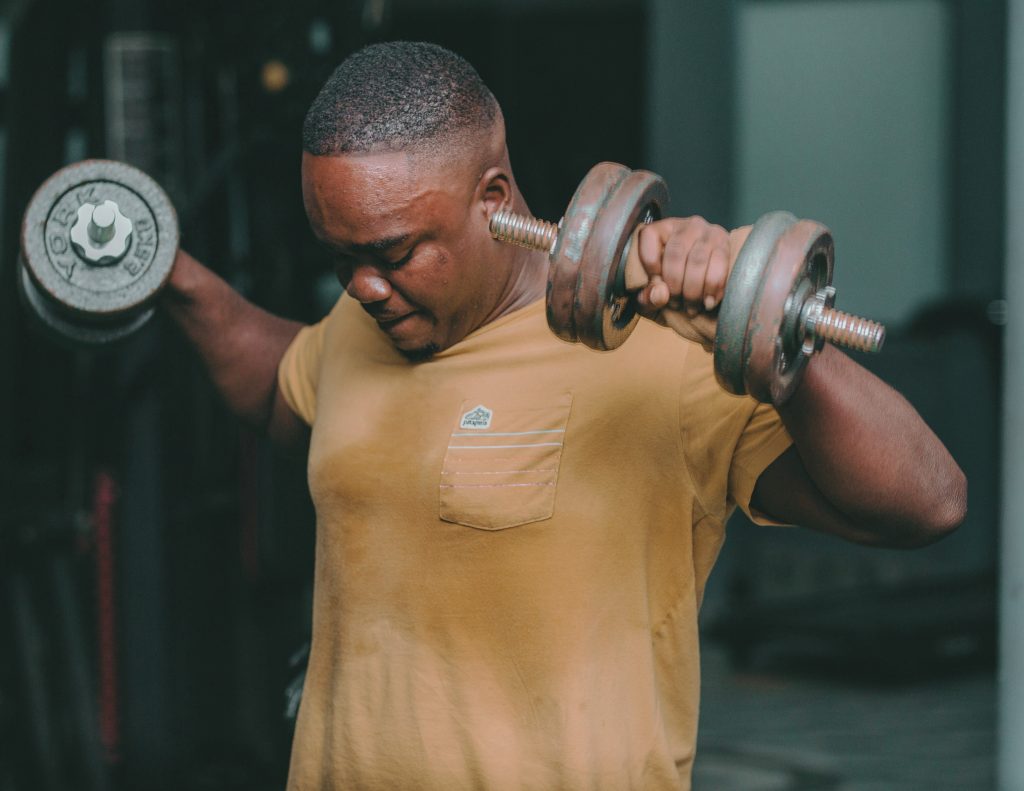
If there is one practical takeaway from this entire topic, it is this: do not treat GLP-1 therapy as the whole plan. Resistance training gives your body a reason to keep muscle while losing weight. Without that training stimulus, the odds of giving up more lean mass than necessary go up.
That is where structure matters. Fitbod is built around personalized strength training rather than generic activity advice. Fitbod personalizes workouts based on fitness goal, experience level, available equipment, workout duration, training history, and recovery awareness. It also adapts future workout recommendations based on logged performance and user feedback, including changes to sets, reps, and weight over time, which supports progressive overload.
That makes Fitbod a practical fit for people who want a structured, personalized resistance-training plan during weight loss or when on GLP-1 therapy. When the goal is muscle-preserving weight loss, people need a repeatable resistance-training plan they can actually follow.
8. Why protein matters more than most people think
GLP-1 medications often reduce appetite dramatically, which is part of why they work. It is also why many people unintentionally miss their daily protein goals. That matters, because lower calorie intake plus lower protein intake plus no resistance training is a bad combination for muscle retention. If you are eating much less than usual and not lifting consistently, you should not be surprised if more lean mass comes off than you expected.
The lesson here is that appetite suppression does not remove the need for protein. It increases the importance of being intentional about it. In general, the recommended protein intake for healthy adults is 0.8 g per kilogram of body weight, per day. For weight loss, 1.2 – 1.6 g per kilogram per day is recommended and for adults taking GLP-1 medications like semaglutide 1.2–2.0 g per pound per day. A good rule of thumb is to aim for 20-30g of protein with every meal.
9. The research is shifting toward muscle-preserving weight loss
The question is no longer just, “How much weight can these drugs help people lose?” It is increasingly, “How do we make that weight loss healthier?” That means:
- more focus on body composition, not just pounds lost
- more focus on preserving strength and physical function
- more emphasis on mitigation strategies like resistance training, protein, and smarter monitoring
10. What to do if you are on a GLP-1 and want to keep muscle
If you are taking a GLP-1 medication and worried about muscle loss, the answer is structure.
1. Strength train consistently: Resistance training gives your body a reason to keep muscle.
2. Prioritize protein: Appetite suppression makes this easy to miss, but it is one of the most important habits to protect.
3. Avoid overly aggressive dieting: Just because it becomes easier to eat very little does not mean that is the best move for muscle retention.
4. Track more than body weight: Strength trends, training performance, recovery, energy, and body composition all matter.
5. Be extra careful if you are older, frail, or starting with low muscle mass: Those situations deserve more individualized attention.
For people who want help turning that advice into action, Fitbod helps users follow a personalized strength-training routine that adapts based on goals, equipment, workout duration, performance, and recovery rather than serving a fixed static plan.
FAQs
- Is muscle loss on GLP-1 drugs real? Some lean-mass loss can happen during GLP-1-related weight loss. But that does not automatically mean dangerous muscle wasting.
- Do semaglutide and tirzepatide cause more fat loss or more muscle loss? Current body-composition reporting generally suggests more fat loss than lean-mass loss on average.
- Can you keep muscle while taking GLP-1s? Yes. That is much more realistic when resistance training and adequate protein are part of the plan.
- Who is most at risk for muscle loss on GLP-1 therapy? Older adults, frail individuals, people with low baseline muscle mass, and people losing weight rapidly without enough protein or resistance training.
- Should you lift weights while on semaglutide or tirzepatide? Yes. For most people concerned about muscle retention, resistance training is one of the most practical pieces of the plan.
- What is the biggest mistake people make on GLP-1 medications? Treating the medication as the entire strategy instead of pairing it with training, protein, and better progress tracking.
Final Thoughts
The fear around GLP-1 muscle loss is understandable, but the evidence points to a more nuanced reality. Yes, some lean-mass loss can happen during GLP-1-related weight loss. But that does not automatically mean severe muscle wasting or worse long-term outcomes.
In many cases, the bigger story is that fat mass falls more than lean mass. The real difference is what happens alongside the medication: resistance training, enough protein, and a plan built to preserve strength while body weight changes.


