


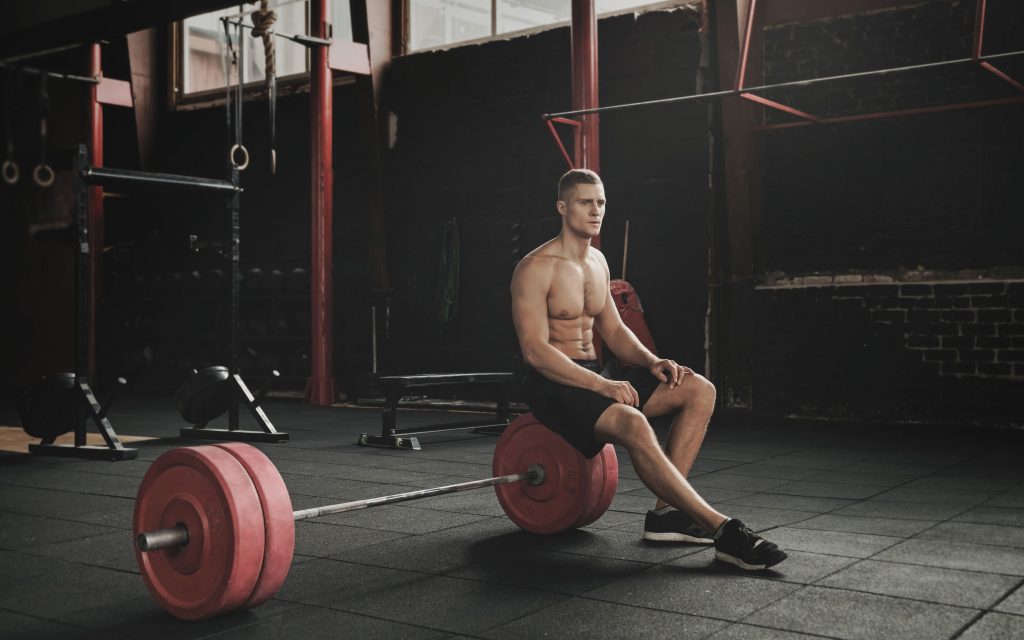
You’ve dialed in your training split. You track your progressive overload. You know your macros. But there’s one variable quietly undermining your results every single session and most gym-goers never give it a second thought: how long do you actually rest between sets? Rest periods aren’t filler time. They’re a training variable as precise and consequential as your rep count or your load, and the research is unambiguous: use the wrong rest interval for your goal, and you’re leaving real gains on the table. The science says the clock matters and the optimal number looks different depending on what you’re actually training for.
This guide breaks down the science-backed rest windows for every common training goal so you can stop guessing and start training smarter.
Key Takeaways
- For strength (heavy lifting): Rest 3–5 minutes between sets to fully restore your nervous system and maximize force output.
- For muscle building (hypertrophy): Rest 2–3 minutes for compound lifts, 60–90 seconds for isolation exercises.
- For fat loss / muscle tone: Rest 30–60 seconds to keep heart rate elevated and caloric burn high.
- For general fitness: Rest 60–90 seconds as a flexible starting point; adjust based on how you feel.
- Shorter isn’t always better, cutting rest too short can negatively impact performance and undermine your goal.
- Fitbod’s algorithm automatically accounts for your goal when programming sets, reps, and workout structure, removing the guesswork.
Table of Contents
- Why Rest Periods Matter More Than You Think
- The Science Behind Rest and Recovery Between Sets
- Rest Times by Goal: The Science-Backed Breakdown
- Compound vs. Isolation Exercises: Does the Move Change the Rest Time?
- Common Mistakes People Make With Rest Periods
- How to Use a Rest Timer (And Why Most People Don’t)
- How Fitbod Structures Your Workout Around Your Goal
Why Rest Periods Matter More Than You Think
Rest periods are one of the most underrated variables in strength training. Many gym-goers obsess over how much weight to lift or how many reps to do, and often skip right past the question of how long to actually recover between sets. But this is a mistake, rest intervals directly affect:
- How much force you can produce (and therefore how heavy you can lift)
- Metabolic stress on muscle tissue (a key driver of hypertrophy)
- Hormonal response during training
- Total training volume across a session
The Science Behind Rest and Recovery Between Sets
To understand why rest periods matter, you need a quick primer on how your muscles produce energy during resistance training. Your body relies on three primary energy systems:
- Phosphocreatine (PCr) system: Fuels short, explosive efforts (1–10 seconds). This is your primary fuel source for heavy lifting. The catch: phosphocreatine stores deplete rapidly and need 2–5 minutes to fully replenish.
- Glycolytic system: Kicks in for efforts lasting 10 seconds to 2 minutes. Produces lactic acid as a byproduct, causing that familiar burning sensation in high-rep sets.
- Oxidative (aerobic) system: Dominant for sustained, lower-intensity efforts. Becomes more relevant during longer rest periods as the body continues to clear metabolic byproducts.
A 2017 meta-analysis in Sports Medicine further confirmed that for maximal strength development, rest periods of 3–5 minutes produced the greatest gains in 1RM performance. However, rest periods aren’t purely about phosphocreatine replenishment. They also modulate:
- Metabolic stress: Shorter rests accumulate more lactate and growth factors like IGF-1, which may play a secondary role in muscle growth.
- Mechanical tension: The primary driver of hypertrophy. You need adequate rest to lift heavy enough to generate sufficient mechanical tension.
- Motor unit recruitment: Heavy, rested sets recruit more high-threshold motor units, which are your largest, most growth-prone muscle fibers.
The takeaway here is that rest periods are a tool, and like every tool, their effectiveness depends on how you use them.
Rest Times by Goal: The Science-Backed Breakdown
Strength & Power 3-5 Minutes: If your goal is to move as much weight as possible, think powerlifting, Olympic weightlifting, or building raw strength, you need the longest rest periods.
Why: Heavy compound lifts (squats, deadlifts, bench press, overhead press) primarily tax the phosphocreatine system and the central nervous system. Both need substantial time to recover between maximal efforts. Cutting rest short means your second set will be a weaker, less effective version of the first, undermining the entire purpose of lifting heavy. Studies consistently show that 3–5 minutes of rest between heavy sets (85–100% of 1RM) allows near-complete phosphocreatine resynthesis and maintains force output across multiple sets. Going below 2 minutes at high intensities results in a measurable drop in bar speed, power output, and total reps completed.
Fitbod’s approach: For users who select Lift Heavier or Practice Powerlifting as their goal, Fitbod programs primarily in the 1–5 rep range at high relative loads, the intensity zone where 3–5 minute rests are essential. According to Fitbod’s training science guidelines, accessory work for strength goals is programmed at 6–12 reps with ~2 minutes of rest. If you’re doing 3-rep sets at 90% of your 1RM, give yourself the full 5 minutes. Set a timer most people significantly underestimate how long they’ve actually rested.
Muscle Building (Hypertrophy) 2-3 Minutes: Building the most muscle possible is the goal for the majority of recreational gym-goers. And the optimal rest interval for hypertrophy has been the subject of more debate than almost any other training variable. Why 2-3 minutes: The Schoenfeld 2016 study referenced above settled much of this debate. Contrary to the “short rests create more growth hormone” theory that dominated gym culture for decades, longer rests (3 minutes) produced greater muscle growth than short rests (1 minute). The mechanism is straightforward: more rest = more weight on the bar = greater mechanical tension = more muscle growth.
The nuance: 60–90 seconds remains appropriate for isolation exercises (curls, lateral raises, leg extensions) where loads are lower and the phosphocreatine demand is less severe. For big compound movements squats, deadlifts, rows, press variations 2–3 minutes is the sweet spot.
Fitbod’s guidelines recommend: 2-3 minutes for compound exercises targeting hypertrophy and 60–90 seconds for isolation exercises targeting hypertrophy. This is the framework Fitbod builds into its Build Muscle and Get Lean goal programs, alongside rep ranges of 6-12 for most working sets.
Practical tip: Pair isolation exercises back-to-back as a superset (e.g., bicep curls + tricep pushdowns) to use rest time efficiently without reducing performance on either movement. Fitbod’s superset and circuit features are built for exactly this.
Fat Loss / Muscle Tone: 30-60 Seconds: If your primary goal is burning calories, reducing body fat, and improving muscle definition, shorter rest periods help you maintain an elevated heart rate, increase metabolic demand per session, and accumulate more total work in less time.
Why it works: Shorter rests increase excess post-exercise oxygen consumption (EPOC) the “afterburn” effect and keep glycolytic metabolism elevated throughout the session. Circuit training and high-density resistance training (more sets in less time) have been shown to burn significantly more calories than traditional straight-set training with long rests.
The trade-off: You’ll lift less weight. That’s acceptable when fat loss is the primary goal, but being cautious about pushing loads too high with minimal rest fatigue-compromised form increases injury risk.
Fitbod’s approach: The Reduce Bodyweight and Muscle Tone goals are configured to emphasize higher rep ranges with shorter rest intervals and circuit-style exercise grouping; the training format best aligned with a fat-loss stimulus while preserving muscle tissue.
Practical tip: Use a timer, not feel. When you’re fatigued, 30 seconds feels like a minute. Keep rest honest to maintain the metabolic effect.
Muscular Endurance 30–60 Seconds: Muscular endurance training and the ability to sustain repeated efforts over time is relevant for athletes, functional fitness enthusiasts, and anyone who wants to improve endurance without purely chasing aesthetics. Why short rests work here: Endurance adaptations occur through repeated exposure to metabolic fatigue. Keeping rests short trains your muscles to clear lactate more efficiently and your cardiovascular system to recover faster between efforts. Over time, you’ll recover more quickly and sustain output longer.
The rep and load prescription: Endurance-focused training typically uses 15-25 reps at 40-60% of 1RM. At these lighter loads, the phosphocreatine system is less relevant so short rests don’t compromise performance the way they would with heavy loads.
General Fitness 60-90 Seconds: For people who just want to feel better, move better, and build a well-rounded base of fitness, 60-90 seconds hits the middle ground: enough recovery to lift at a reasonable effort level, but short enough to keep sessions efficient. Fitbod’s Improve General Fitness goal is designed for exactly this population, using balanced rep ranges, moderate loads, and flexible session structures that don’t require the rigid adherence to rest periods that more goal-specific programs demand.
4. Compound vs. Isolation Exercises: Does the Move Change the Rest Time?
Yes and this is a distinction many lifters overlook. Compound exercises (squats, deadlifts, bench press, pull-ups, rows) recruit multiple large muscle groups simultaneously and place significant demand on the central nervous system. They require longer recovery times even within the same training goal. Isolation exercises (bicep curls, lateral raises, leg extensions, calf raises) target a single muscle or small muscle group. Because the systemic demand is lower, shorter rests are sufficient without sacrificing performance. Fitbod applies this principle automatically. Its algorithm programs different exercise types within the same workout and accounts for how fatiguing each movement is when structuring your session’s overall volume and intensity.
5. Common Mistakes People Make With Rest Periods
- Mistake 1: Resting by feel instead of a timer. Perceived rest is almost always inaccurate. Research shows people consistently underestimate how long they’ve rested when fatigued and overestimate rest length when they feel recovered. Use a timer every time.
- Mistake 2: Using the same rest for every exercise. A 60-second blanket rest policy doesn’t work if you’re doing both heavy deadlifts and cable flies in the same workout. Match rest to the exercise’s demand.
- Mistake 3: Cutting rest short to “save time”. A set of squats performed with inadequate rest produces less mechanical tension, fewer reps, and inferior stimulus. You’re not saving time, you’re reducing the return on your investment.
- Mistake 4: Resting too long on isolation work. Spending 4 minutes between sets of bicep curls isn’t increasing your gains. It’s just extending your session unnecessarily.
- Mistake 5: Ignoring rest during circuits and supersets. Circuits aren’t rest-free. They use active recovery (moving between exercises targeting different muscle groups). This is strategic, not a shortcut.
6. How to Use a Rest Timer (And Why Most People Don’t)
The most common reason people skip rest timers? It feels unnecessary, then they look up from their phone mid-scroll and realize five minutes have passed. Rest timers create accountability. They keep sessions tight, consistent, and comparable across workouts which matters for progressive overload. If you rested 90 seconds one week and 4 minutes the next, your performance data is meaningless as a guide for next week’s weights. Fitbod has a built-in rest timer that activates automatically after you log a completed set. It counts down your rest interval, sends a haptic alert on Apple Watch or Wear OS when it’s time to start your next set, and keeps you on pace without requiring you to think about it.
7. How Fitbod Structures Your Workout Around Your Goal
One of the core advantages of using Fitbod is that rest periods are part of a larger, integrated system, not an isolated variable you have to manually manage. When you set your goal in Fitbod:
- Lift Heavier / Practice Powerlifting: Fitbod programs predominantly 1–5 rep sets at high relative loads, with exercise selection weighted toward primary compound lifts. The implied rest structure aligns with 3–5 minute recovery windows needed for maximal strength work.
- Build Muscle: Sets, reps (6–12 range), and exercise selection are calibrated for mechanical tension and volume the two primary drivers of hypertrophy with compound exercises structured first and isolation work later in the session, matching the compound-before-isolation rest logic.
- Get Lean / Reduce Bodyweight: Higher rep ranges, circuit and superset options enabled, and session durations that emphasize training density over absolute load.
- Improve General Fitness: Balanced volume, moderate loads, and flexible session structure.
FAQs
- Is it bad to rest longer than recommended? For most goals, slightly longer rest is preferable to shorter. The only downside of resting too long is reduced training density (fewer sets per hour), which matters most for fat loss goals. For strength and hypertrophy, erring toward more rest is almost always the safer choice.
- Should I rest the same amount between warm-up sets and working sets? No. Warm-up sets use submaximal loads 60-90 seconds is sufficient between them. Save your full rest intervals for working sets where performance actually counts.
- Does rest period length change as I get stronger? Not significantly. The rest period recommendation is based on the load relative to your max, not your absolute strength level. A beginner squatting 135 lbs at 85% of their 1RM needs the same ~3 minutes as an advanced lifter squatting 400 lbs at 85%.
- Can I do cardio or stretching between sets to use the time? Light mobility work, static stretching of non-working muscles, or very low-intensity movement is generally fine during rest periods. Avoid anything that fatigues the muscles you’re about to train again, no jumping jacks between squat sets.
- What about supersets do I still need to rest? Yes. With a superset, you usually rest after completing both exercises in the pair, rather than between the two individual exercises. For example: perform Set A → immediately perform Set B → rest 60–120 seconds → repeat. This is what makes supersets time-efficient: while one muscle group works, the other can partially recover, especially when you pair opposing or non-competing exercises. Just remember that heavier lifts, same-muscle supersets, or high-effort sets may require longer rest to maintain performance and good form.
- How does Fitbod handle rest timers? Fitbod’s built-in rest timer activates automatically after every logged set. It’s available on iPhone and syncs to Apple Watch and Wear OS for haptic alerts when your rest period ends so you never have to think about timing while you train.
- Does rest time matter for bodyweight training? Yes. Bodyweight training follows the same principles as weighted training. If you’re doing max-effort push-ups or pull-ups at high relative effort, treat it like a strength exercise and rest accordingly. High-rep bodyweight circuits for conditioning? Shorter rest applies.
- I’m short on time. Can I just shorten my rest periods? If you’re time-crunched, a better approach is reducing total sets rather than cutting rest across the board. Fewer high-quality, well-rested sets produce better results than many compromised sets. Fitbod’s duration setting (30/45/60 min) automatically scales your session’s exercise and set count to fit your available time without sacrificing per-set quality.
- Do rest periods differ for men and women? Research shows women may recover slightly faster than men between sets due to differences in muscle fiber composition and fatigue mechanisms. In practice, the same evidence-based rest guidelines apply to both individual variation matters far more than gender.
- What if I feel ready before the timer goes off? Feeling recovered and being recovered are different things. Phosphocreatine resynthesis and CNS recovery happen at set biological rates regardless of perceived readiness. Especially for heavy strength work, wait for the timer, not the feeling.
Final Thought
Rest periods are one of the simplest, most evidence-backed levers you can pull to get more from every single workout. Yet they’re almost universally mismanaged either cut too short in the name of intensity, or stretched too long through distraction.
The fix isn’t complicated: match your rest to your goal, use a timer, and let the science do the work. If you’re training for strength, protect those 3-5 minutes like they’re part of the set itself because effectively, they are. If you’re training for muscle, 2-3 minutes on your big lifts will deliver measurably better results than the 60-second rests that gym culture mythologized for decades.
Tools like Fitbod take this further by building your entire session exercise selection, rep ranges, progressive overload, and workout density around your stated goal. The rest timer built into the app is a small but meaningful nudge toward consistency, keeping you accountable to the science session after session. Because the best rest period isn’t just the right one in theory it’s the one you actually follow.


