
How to do a Barbell Decline Bench Press
Reviewed by Jim Parker, CPT, B.A. Kinesiology
About this exercise
- Sets Logged
- 1,208,914
- Popularity Rank
- 198th
- Difficulty
- Intermediate
- Chest Strength
- 74 mSCORE 40th
- Equipment Required
 Barbells
 Decline Bench
Workouts with Barbell Decline Bench Press
Instructions for Proper Form
Barbell Decline Bench Press is a variation on the standard Barbell Bench Press. Like the standard Barbell Bench Press, this compound exercise primarily targets the chest, but also recruits the triceps and shoulders. Performing this exercise on a decline helps to emphasize the lower part of the chest.
- Lie your back onto a decline bench while squeezing your shoulder blades together and place your heels firmly on the ground underneath your knees.
- The bench should be in contact with your head, shoulders, and butt at all times.
- Grab ahold of the barbell just outside shoulder-width apart before unracking the barbell so that your arms are extended over your shoulders.
- Keeping your core braced, descend the barbell to your chest by flexing your elbows keeping them at a 45 degree angle from your torso.
- Gently touch the bottom of your chest with the barbell before exhaling the barbell back to the starting position.
Tips & FAQs
Barbell Decline Bench Press is also known as:
- BB Decline Press
- Decline Chest Press
Does Decline Bench make your chest "saggy"?
No, decline bench presses do not make your chest saggy. This exercise targets the lower part of the pectoral muscles, helping to develop and strengthen them. Sagging of the chest is more related to factors such as genetics, age, skin elasticity, and overall body fat rather than specific exercises like the decline bench press.
Common Form Mistakes
Bouncing the Bar
Bouncing the bar off your chest can help you lift heavier weights, but it increases your risk of injury, and makes the exercise less effective. Focus on slowly lowering the bar, and gently tapping your chest at the bottom of the movement.
Flared Elbows
Flaring your elbows out can sometimes help you lift heavier weights, but it places more tension on your shoulders. The ideal position can vary slightly from person to person, but try to keep your elbows around 45 degrees from your torso, and make small adjustments from there.
Keep Your Wrists Straight
Allowing your wrist to extend in order to grab a barbell may feel more secure, and less likely to slip out of your hands. The downside is that it places a lot of tension on your wrist, and can be a limiting factor to how much weight you can move. Focus on keeping your wrist in a neutral position inline with your forearm.
Weight & 1 Rep Max Calculator
Average Barbell Decline Bench Press standards by male, female, weight, age and height
Use this calculator to see Fitbod's possible first recommendations for you. This would be your starting line, based on more than 4.5 billion logged sets from 1.1 million users.

- beginner8reps55lbs1 Rep Max70lbs
- intermediate8reps70lbs90lbs
- advanced8reps85lbs105lbs
Enter your stats to calculate your Reps & Weight
Alternatives & Variations to Barbell Decline Bench Press
1. Barbell Bench Press
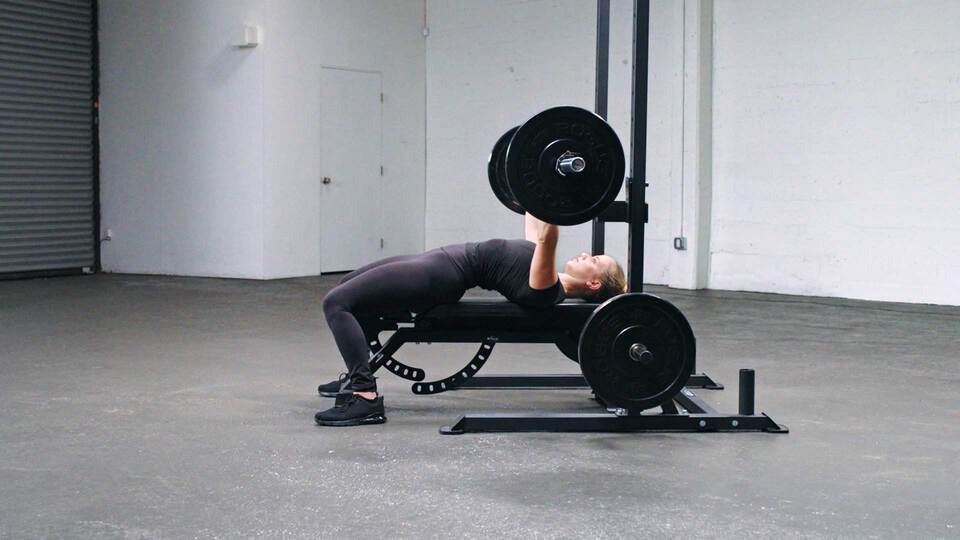 99.2 mSCORESWAPPED 13,231 TIMES
Bench Press is one of the three Powerlifting movements, and one of the most common upper body exercises. It’s a fantastic compound exercise that can help you build strength in your chest, shoulders, and triceps. It’s a staple in most fitness programs, and is often used as a metric for tracking upper body strength in general.
2. Dumbbell Bench Press
 99.7 mSCORESWAPPED 6,757 TIMES
Dumbbell Bench Press is a variation on the standard Bench Press. Like Bench Press, this compound exercise primarily targets the chest, while also training the triceps and shoulders. The use of dumbbells allows for greater instability which can help you become more stable on pushing movements in general, while also isolating each side of the body to prevent you from compensating for any weaknesses between sides.
3. Barbell Incline Bench Press
 98.9 mSCORESWAPPED 6,518 TIMES
Barbell Incline Bench Press is a variation on a standard Bench Press. Similar to Bench Press, this compound exercise primarily targets your chest, but this variation places much more emphasis on your shoulders and upper chest.
4. Dumbbell Incline Bench Press
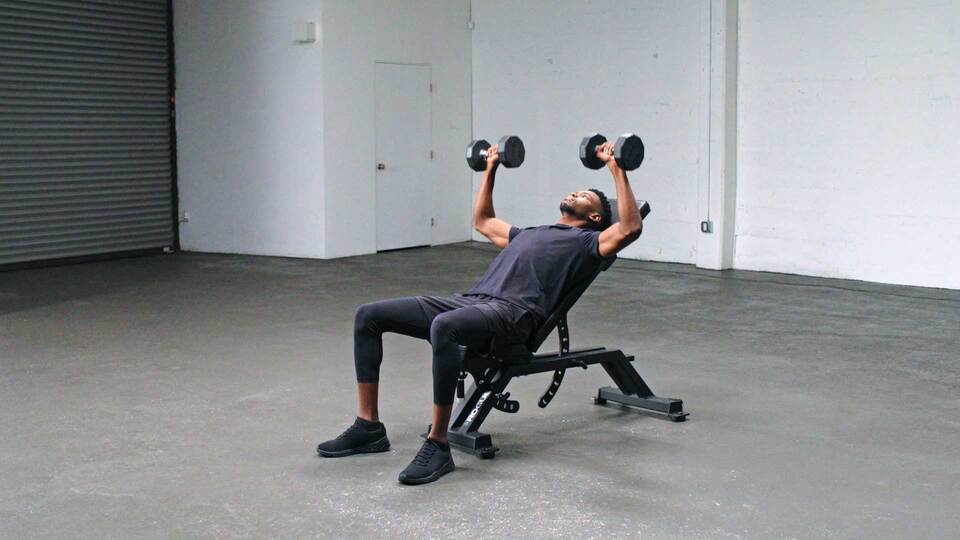 99 mSCORESWAPPED 5,954 TIMES
Dumbbell Incline Bench Press is a variation on the more standard Barbell Incline Bench Press. This compound exercise primarily targets the chest, but the incline also places more emphasis on the shoulders. The use of dumbbells makes this exercise more unstable than its barbell counterpart, while also forcing you to address any strength discrepancies between sides.
5. Dumbbell Decline Bench Press
 86.1 mSCORESWAPPED 4,898 TIMES
Dumbbell Decline Bench Press is a variation on the more standard Barbell Decline Bench Press. Similar to other decline variations, this compound exercise primarily targets the chest, shoulders, and triceps, however the decline adds more emphasis to your lower chest.
6. Dumbbell Fly
 98.3 mSCORESWAPPED 3,797 TIMES
Dumbbell Fly’s are one of the most common isolation chest exercises, and for good. It primarily targets the muscles in the chest, but also recruits the shoulders for stability. The use of dumbbells ensures that you’re targeting each side of the body independently, and prevents compensating for any weaknesses between sides. In addition the isolated nature of this exercise is a great way to fatigue your chest, and focus on building both muscle mass and increasing strength in your chest.
7. Cable Crossover Fly
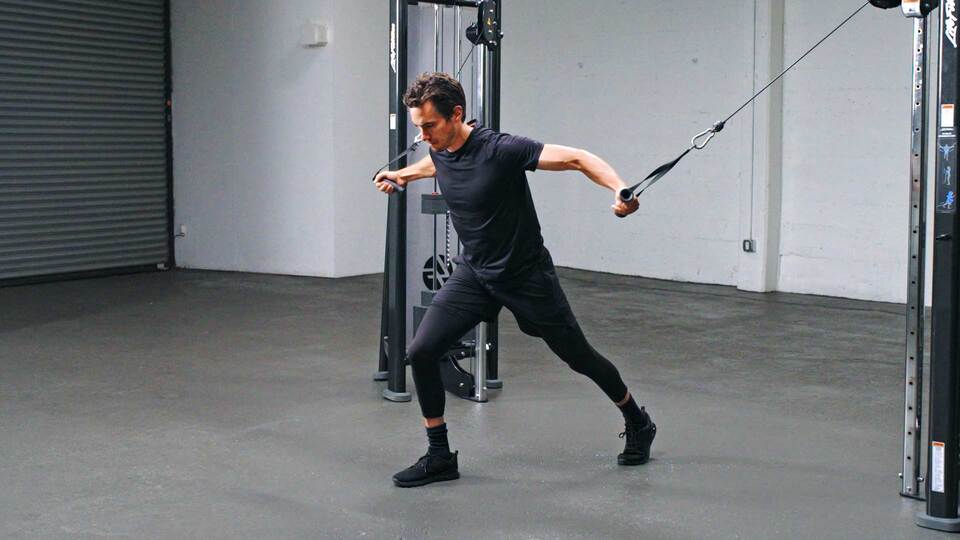 97.3 mSCORESWAPPED 3,579 TIMES
Cable Crossover Fly is an isolation exercise that targets the chest. It’s a variation on the more standard Dumbbell Fly, and can easily be adapted to further isolate specific areas of the chest. Using cables to add resistance allows you to keep more consistent tension on your chest, as well as control the angle that the resistance is coming from.
8. Hammerstrength Decline Chest Press
 86.5 mSCORESWAPPED 3,359 TIMES
Hammerstrength Decline Chest Press is a variation on the more standard Barbell Decline Bench Press. This compound movement primarily targets your chest, focusing more on the lower pecs. The use of a Hammerstrength Machine restricts your range of motion and adds stability to the movement, allowing you to focus more on exertion rather than stabilizing the movement. This is a great exercise for getting consistent tension and improving muscle activation.
9. Hammerstrength Chest Press
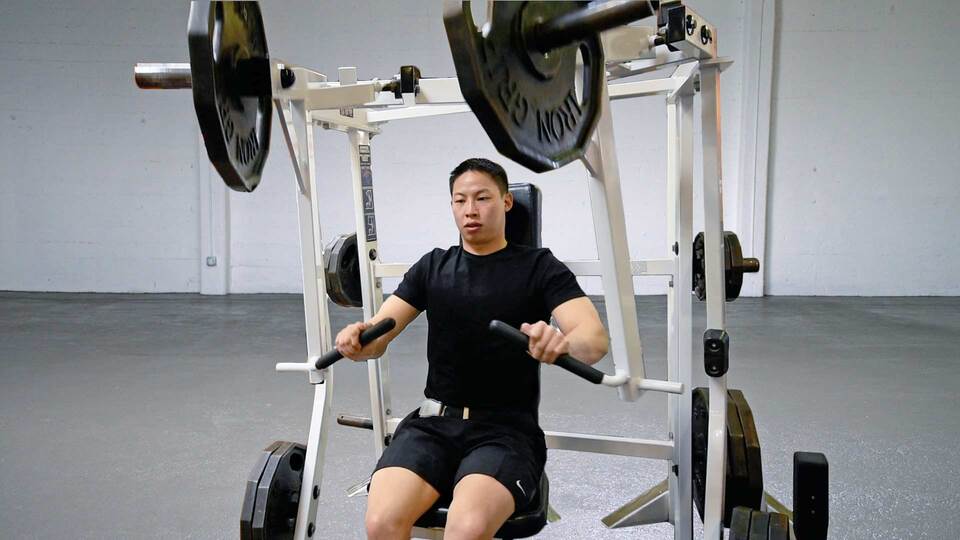 94.3 mSCORESWAPPED 3,002 TIMES
Hammerstrength Chest Press is a variation on the more standard Barbell Bench Press. Similar to Bench Press, this compound exercise primarily targets your chest, shoulders, and triceps. The use of a Hammerstrength machine forces you to use a fixed range of motion. This can help you either learn the movement, or focus your efforts on exertion rather than stability.
10. Machine Fly
 98.2 mSCORESWAPPED 2,697 TIMES
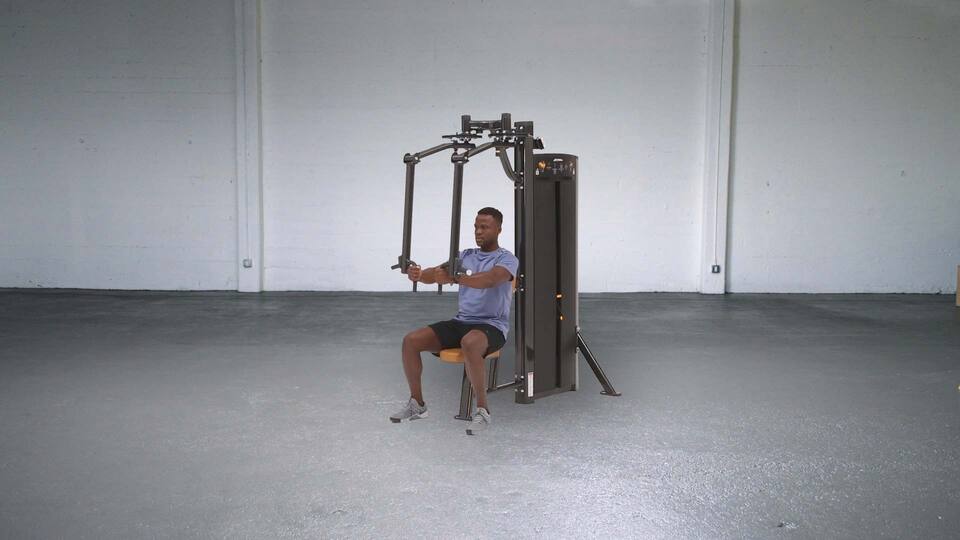
Machine Fly is a variation on the more standard Dumbbell Fly. This isolation chest exercise primarily targets the chest, but also recruits the shoulders. The use of a machine makes the exercise more stable allowing you to focus on exertion or learn the movement with minimal risk of injury. This is a great exercise for beginners looking to learn the movement, or advanced lifters looking to push this movement to it’s limit.