
How to do a Cable Bicep Curl
Reviewed by Jim Parker, CPT, B.A. Kinesiology
About this exercise
- Sets Logged
- 2,297,208
- Popularity Rank
- 65th
- Difficulty
- Beginner
- Biceps Strength
- 93 mSCORE 8th
- Equipment Required

Workouts with Cable Bicep Curl
Target muscles worked
Instructions for Proper Form
Similar to other curls, this isolation exercise targets the biceps. The use of cables allows you to apply tension to your biceps at a different angle than with free weights. This is especially helpful for applying tension at the top of your range of motion. Because you can maintain more tension on your biceps throughout the movement, this is especially helpful for building muscle mass in your biceps.
- Place the cable anchor at the lowest setting.
- Stand upright with your feet hip width apart while grabbing the handle so that your palms are facing up.
- Bend your elbows to raise the handle up towards your shoulders keeping your elbows close your torso.
- Controllably return to the starting position.
Common Form Mistakes
Limit Range of Motion at the Bottom
There should always be tension on your biceps. It’s very common to lose tension at the bottom of the movement when your arms are fully extended. Limit your range of motion and keep your arm slightly bent to maintain tension in your biceps between reps.
Weight & 1 Rep Max Calculator
Average Cable Bicep Curl standards by male, female, weight, age and height
Use this calculator to see Fitbod's possible first recommendations for you. This would be your starting line, based on more than 4.5 billion logged sets from 1.1 million users.

- beginner8reps30lbs1 Rep Max40lbs
- intermediate8reps35lbs45lbs
- advanced8reps40lbs50lbs
Enter your stats to calculate your Reps & Weight
Alternatives & Variations to Cable Bicep Curl
1. Cable Rope Hammer Curls
 72.7 mSCORESWAPPED 4,896 TIMES
Cable Rope Hammer Curls focus on the biceps and brachialis with a neutral grip, offering a variation that differs from standard curls by emphasizing the outer biceps and forearms. Using a rope attachment on a cable machine allows for a full range of motion while providing constant tension, leading to improved muscle growth and strength. This exercise is particularly effective for developing arm thickness and grip strength, making it a valuable addition to any arm workout routine for balanced muscle development.
2. Dumbbell Bicep Curl
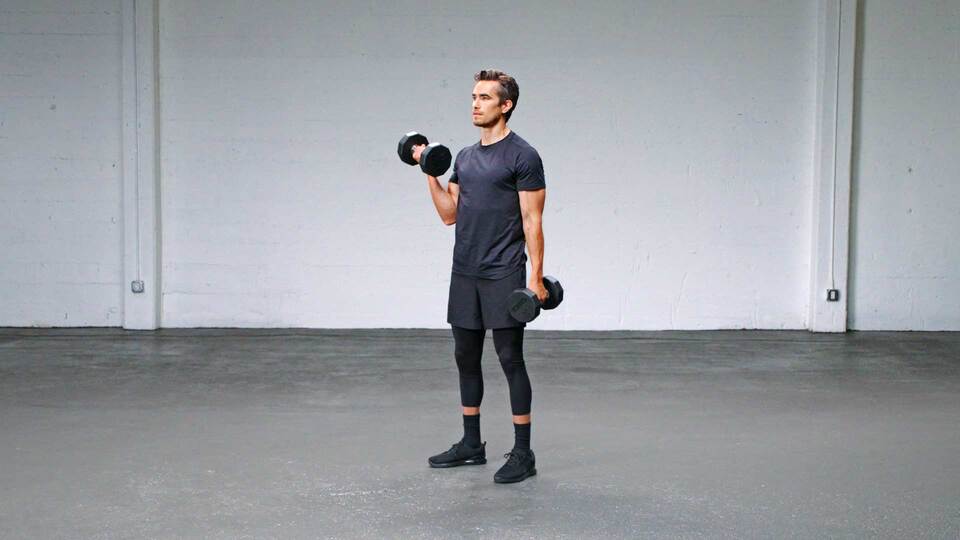 99.6 mSCORESWAPPED 4,285 TIMES
This exercise is one of the most common isolation, biceps exercises out there. Dumbbells help prevent compensating for strength imbalances, as well as allows plenty of freedom in your range of motion. This is a staple exercise in most workouts, and is a great way to build strength and muscle mass in your biceps.
3. Hammer Curls
 99.2 mSCORESWAPPED 3,299 TIMES
Similar to other curls, this isolation exercise targets the biceps. Unlike the standard Dumbbell Bicep Curl, this variation rotates your wrist into a more natural position. This rotation also help to emphasize the long head of the bicep. This is a great exercise for adding some variety to your curls as well as developing functional strength and building muscle mass.
4. Machine Bicep Curl
 93.1 mSCORESWAPPED 3,196 TIMES
Similar to other curls, this isolation exercise targets the biceps. The use of a machine adds stability to the movement by forcing you to use a fixed range of motion. This added stability means you can focus more on exertion than stabilizing the movement. Since your range of motion is fixed, this is a great exercise for learning, or to push the limits of this movement.
5. Single Arm Cable Bicep Curl
 74.1 mSCORESWAPPED 2,688 TIMES
Similar to other curls, this isolation exercise targets the biceps. Using one arm at a time helps to prevent compensating for discrepancies in strength between sides, as well as adding a small demand for engaging your core to maintain good posture. The use of a cable gives you more control over where your resistance is coming from, which can help you maintain tension in your bicep throughout the movement.
6. EZ-Bar Curl
 98.1 mSCORESWAPPED 2,604 TIMES
Similar to other curls, this isolation exercise targets the biceps. The use of an EZ-Bar adds some stability to the movement when compared to equipment like dumbbells. This added stability means you can focus more on exertion than stability, and is a great way to develop strength. Additionally, the EZ-Bar allows for a more comfortable grip than a barbell, as well as allows your wrist to rotate slightly which can lead to better activation of the biceps.
7. Barbell Curl
 98.5 mSCORESWAPPED 2,523 TIMES
As with other curls, this isolation exercise targets the biceps. The use of a barbell adds more stability to this movement, and somewhat restricts your range of motion. This added stability means you can focus more on exertion than stabilizing the movement. This is a great variation for helping you build strength in your biceps.
8. Behind the Back Cable Bicep Curl
 71.4 mSCORESWAPPED 2,401 TIMES
An isolation bicep exercise performed with the cable behind the back to emphasize peak contraction and full range of motion. It offers a unique angle that can lead to increased bicep growth and improved arm aesthetics.
9. Cross Body Hammer Curls
 95.4 mSCORESWAPPED 1,509 TIMES
Cross Body Hammer Curls are a variation on the more standard Hammer Curl. Like other variations this is an isolation exercise that targets the biceps. Unlike many other Hammer Curl variations, this exercises has you bring the weight across your body instead of straight up and down.
10. Machine Preacher Curl
 82.4 mSCORESWAPPED 1,463 TIMES
Machine Preacher Curl is an isolation exercise that targets the biceps. By using a preacher curl machine, you ensure your elbows are locked in place, preventing any swinging to assist in moving the weight. The machine adds stability to the movement, allowing you to focus more on exertion than stabilization, making it excellent for bicep development.