
How to do a Front Squat
Reviewed by Jim Parker, CPT, B.A. Kinesiology
About this exercise
- Sets Logged
- 2,014,709
- Popularity Rank
- 105th
- Difficulty
- Intermediate
- Quads Strength
- 96 mSCORE 14th
- Equipment Required
 Barbells
 Squat Rack
Workouts with Front Squat
Target muscles worked
Instructions for Proper Form
Front Squat is one of the most common variations of the more standard Back Squat. Like other squat variations, this is a compound exercise that primarily targets your quadriceps. By racking the bar in front of your body instead of behind, you can further emphasize your quads. While the movements are fairly similar, Front Squat may translate better to applications in sports and other real world activities.
- Rack the barbell to shoulder height. Bring your chest to the bar to rest the bar on the uppermost part of your shoulders and secure the bar in a front rack hold. If you are unable to comfortably hold this position, cross your arms instead to hold the barbell in place and keep your elbows high.
- Lift the barbell and step back placing your feet just outside shoulder-width apart and slightly angled outward.
- Keep your weight evenly distributed through your feet.
- Begin to descend by reaching your hips slightly back.
- Your knees should track outward over your second toe and slightly forward as you descend while keeping your core braced to maintain an upright torso.
- You should continue to descend to a deep enough depth that allows you spine to remain neutral before extending back to the starting position.
Tips & FAQs
Front Squat is also known as:
- Barbell Front Squat
- BB Front Squat
- Front Loaded Squat
- Front Rack Squat
Common Form Mistakes
Poor Mobility on Front Rack
Poor mobility is an incredibly common limiting factor when it comes to having a proper front rack. There are a number of areas that can impede your ability to get into this position, but wrist, tricep, and T-spine mobility are some of the most common. If you’re struggling with your front rack spend some time working on mobility in these areas.
Knees Caving In
Always make sure that your knees are tracking over your toes. Allowing your knees to cave inward places a ton of stress on them, and increases your risk of injury. If you're struggling with your knees caving in, focus on keeping your weight evenly distributed throughout your foot.
Weight & 1 Rep Max Calculator
Average Front Squat standards by male, female, weight, age and height
Use this calculator to see Fitbod's possible first recommendations for you. This would be your starting line, based on more than 4.5 billion logged sets from 1.1 million users.

- beginner8reps45lbs1 Rep Max55lbs
- intermediate8reps55lbs70lbs
- advanced8reps70lbs90lbs
Enter your stats to calculate your Reps & Weight
Alternatives & Variations to Front Squat
1. Back Squat
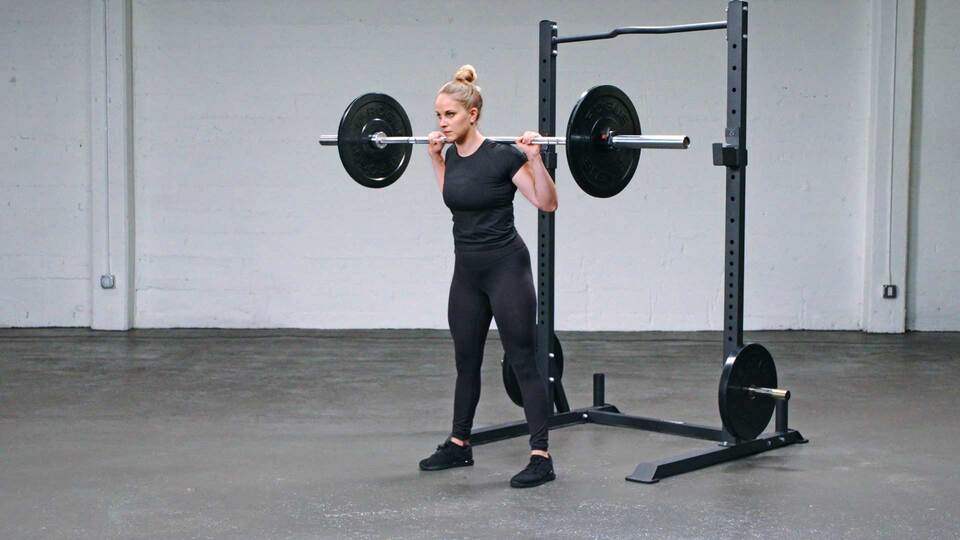 99.3 mSCORESWAPPED 29,488 TIMES
Back Squat is one of the three Powerlifting movements, and one of the most common lower body exercises. It’s a great compound exercise that can help build strength and muscle mass in your leg, especially your quadriceps. It’s a staple in most fitness programs, and is often used as a metric for tracking lower body strength in general.
2. Leg Press
 99.7 mSCORESWAPPED 12,940 TIMES
Leg Press is a compound exercise that primarily targets the quadriceps. The exercise itself is fairly similar to a standard squat, with some key differences. The biggest of these differences is the added stability from supporting your back on the Leg Press Machine. The end result of these changes is a more stable movement that further emphasizes your quadriceps. Leg Press is an excellent exercise for anyone looking to build muscle mass or strength in their quads.
3. Leg Extension
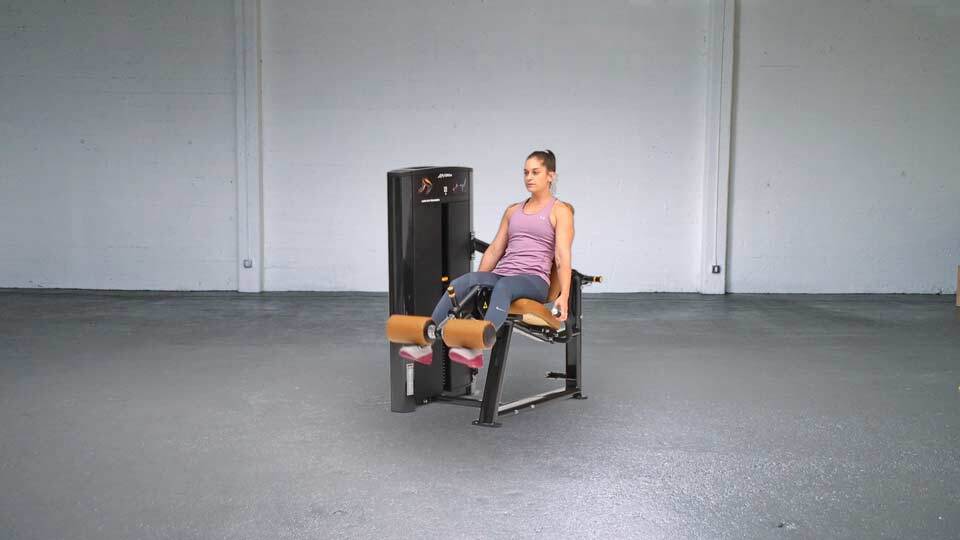 99.4 mSCORESWAPPED 9,327 TIMES
Leg Extensions are an isolation exercise that target the quads. Due to a severe lack of isolation movements for the lower body, this is a great option for specifically targeting your quadriceps. The use of a machine restricts your range of motion, and adds some stability to the movement. This can help your focus more on exertion than stabilizing the movement. The downside to this exercise is that it places a lot of tension on your knee. Keep your weights light, and focus on pausing near the end of your range of motion.
4. Hack Squat
 90.1 mSCORESWAPPED 5,456 TIMES
Hack Squat is a variation of squats that utilizes a specific machine to add resistance. Like other squat variations, this exercise primarily targets your quads. The use of a machine can assist you by redistricting your range of motion more than with the use of free weights, as well as adds more stability to the movement.
5. Dumbbell Squat
 94.1 mSCORESWAPPED 5,158 TIMES
Dumbbell Squat is a variation of the more standard Squat. Like other variations, this is a compound exercise that primarily targets the quadriceps. The advantage of using dumbbells rather than a barbell is that you have more freedom in your range of motion which can make this a more accessible variation for anyone with mobility limitations. With that freedom comes a bit more instability with this exercise though, which can help you further improve your squat for, and build the strength needed for heavier, or more complex variations.
6. Dumbbell Lunge
 97.6 mSCORESWAPPED 4,489 TIMES
Dumbbell Lunge is a variation on the more standard Lunge. Similar to other Lunge variations, Dumbbell Lunge is a compound exercise that primarily targets the quads. The exercise itself is the same as a standard lunge except for the added weight from holding dumbbells in each hand. This is a great variation for anyone looking to make their lunges a bit more challenging without adding more complexity to the movement.
7. Machine Leg Press
 95.1 mSCORESWAPPED 3,087 TIMES
Machine Leg Press is a variation on the more standard Leg Press. Like the Leg Press, this is a compound exercise that primarily recruits the quadriceps. This is a great exercise for building strength and muscle mass in your quads. The use of a machine doesn’t change anything significant about this exercise, although your positioning may change depending on the machine you’re using.