How to do a Single-Leg Stability Ball Hip Thrust
Reviewed by Jim Parker, CPT, B.A. Kinesiology
About this exercise
- Sets Logged
- 166,183
- Popularity Rank
- 473rd
- Difficulty
- Intermediate
- Glutes Strength
- 87 mSCORE 33rd
- Equipment Required

Workouts with Single-Leg Stability Ball Hip Thrust
Target muscles worked
Instructions for Proper Form
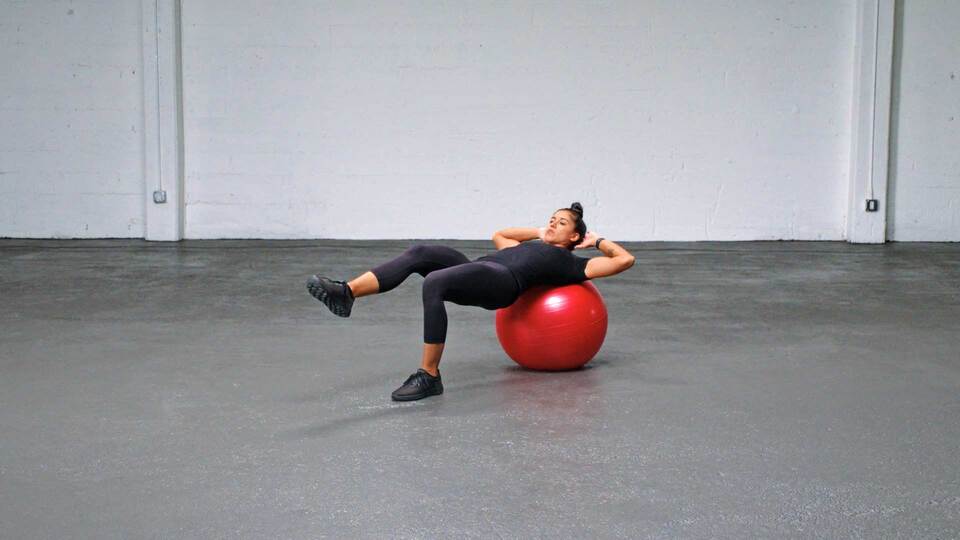
This exercise is a variation on the more common Hip Thrust. Like the Hip Thrust, this is a compound, bodyweight movement that primarily targets your glutes. By placing your back on a stability ball, you add some instability to the movement, which can lead to better muscle activation. In addition by raising your upper body off the ground, you can slightly increase your range of motion.
- Position your body such that your upper back is supported by the stability ball, and place your feet flat on the floor.
- Raise one leg off the ground. Ensure you maintain balance on the stability ball.
- Slowly allow your body to descend into the starting position.
- Contract your glutes and hamstrings while driving your heel into the ground to raise your hips up.
- Raise your hips until they are in line with your knees and shoulders.
- Tense your glutes and hamstrings and hold this position for a movement at the top of the movement.
- Maintain good posture by keeping your core engaged for stability and your upper back in contact with the stability ball. Keep your hips level throughout this exercise.
- You should feel this exercise in your glutes and hamstrings.
Common Form Mistakes
Over Extending
Don’t drive your hips as far as you can. This can increase your risk of injury, and doesn’t benefit the exercise itself. Drive your hips forward to a point where you feel good activation in your glutes, and hold that position.
Sets & Reps Calculator
Average Single-Leg Stability Ball Hip Thrust standards by male, female, gender, weight, age and height
Use this calculator to see Fitbod's possible first recommendations for you. This would be your starting line, based on more than 4.5 billion logged sets from 1.1 million users.

- beginner3sets3reps1 Set Max3reps
- intermediate4sets4reps5reps
- advanced4sets5reps6reps
Enter your stats to calculate your Sets & Reps
Alternatives & Variations to Single-Leg Stability Ball Hip Thrust
1. Stability Ball Hip Thrust
 48.7 mSCORESWAPPED 1,589 TIMES
This exercise is a variation on the more standard Hit Thrust. Like Hip Thrust, this is a compound, bodyweight movement that primarily targets the glutes. By placing your back on a stability ball, you can add more instability to the movement, which can lead to better muscle activation. In addition, by raising your torso off the ground, you can increase your range of motion. This is a great variation for anyone looking to add a bit more of a challenge to their Hip Thrusts.
- Intermediate
- Glutes
- Stability (Swiss) Ball
2. Barbell Hip Thrust
 95.2 mSCORESWAPPED 1,320 TIMES
Barbell Hip Thrust is a more challenging, weighted variation of the Hip Thrust. Beyond the added resistance from using a barbell, you’ll also place your shoulder blades on a flat bend in or to raise yourself off the ground. This is a great variation for anyone looking to make their Hip Thrusts more challenging.
3. Hip Thrust
 97 mSCORESWAPPED 1,259 TIMES
Hip Thrust is a compound, bodyweight exercise that primarily targets your glutes. This is a great beginner exercise that can help you learn and develop your glute drive, which is helpful for a number of different exercises and general movements. It’s a simple and easy to perform exercise that can help you develop strength.
4. Cable Hip Extension
 89.9 mSCORESWAPPED 1,253 TIMES
Cable Hip Extension is an exercise that involves strapping your leg to a cable machine, and then extending your leg out behind you. The use of a cable allows you to have precise control over the direction your resistance is coming from. This lets you perform this exercise from a standing position unlike many other similar exercises that require you to lay on the ground.
5. Dumbbell Hip Thrust
 88.1 mSCORESWAPPED 1,211 TIMES
This exercise is a weighted variation on the more standard Hit Thrust. By holding a dumbbell against your hips, you can add a bit more resistance to this usually bodyweight exercise. This is a great variation for adding a bit more difficulty to your Hip Thrusts.
6. Glute Kickback Machine
 94.6 mSCORESWAPPED 1,166 TIMES
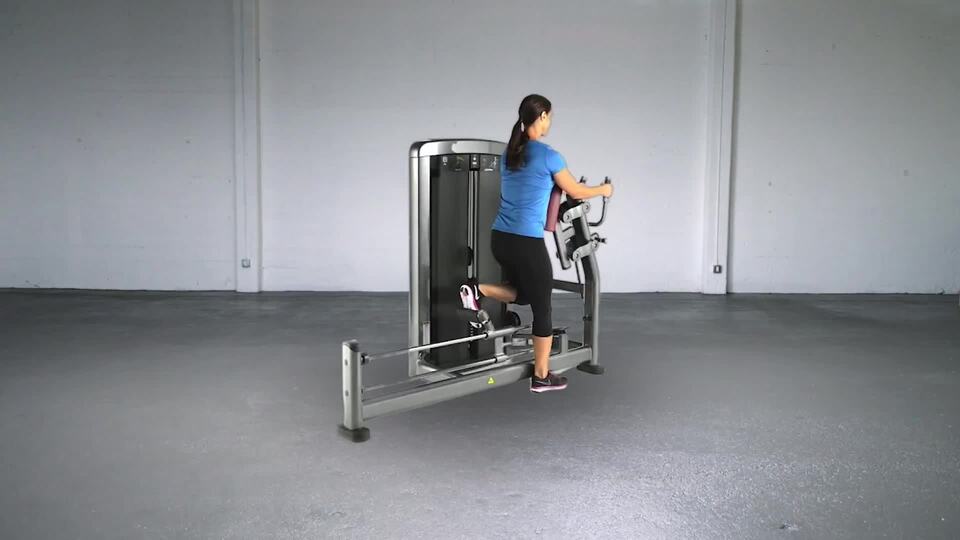
Glute Kickback Machine is a variation on the more standard Single Leg Kickback. Unlike the standard variation, this exercise uses a machine to add resistance to the movement rather than just bodyweight. This gives you a bit more control over your resistance, and can be more easily scaled to your current capabilities. Additionally, the use of a machine restricts your range of motion, and adds stability to the movement. This lets you focus more on exertion than stabilizing the movement.