
How to do a TRX Lunge
Reviewed by Jim Parker, CPT, B.A. Kinesiology
About this exercise
- Sets Logged
- 32,688
- Popularity Rank
- 960th
- Difficulty
- Beginner
- Quads Strength
- 87 mSCORE 49th
- Equipment Required

Workouts with TRX Lunge
Target muscles worked
Instructions for Proper Form
The TRX Lunge is a dynamic variation of the traditional lunge, focusing on strengthening the lower body, particularly the glutes and quadriceps, while also enhancing balance and stability. Using TRX straps provides a supportive element that allows for modifications in intensity and depth, making it a versatile exercise for all fitness levels.
- Adjust the TRX straps such that the handles are roughly at chest height.
- Face the TRX straps with your feet roughly shoulder width apart, and a slight bend in your knees.
- Grasp the TRX handles with a neutral grip, such that your palms are facing each other.
- Shift your weight to one leg, and step backwards with your other leg. Use the straps to help you maintain balance.
- Slowly descend into a lunge position, while extending your arms to maintain some tension on the straps.
- Engage your quads, glutes, and hamstrings to extend your front leg, and return to the starting position. Use the straps help you balance, and return to the starting position as needed.
- Switch legs, and repeat.
Sets & Reps Calculator
Average TRX Lunge standards by male, female, gender, weight, age and height
Use this calculator to see Fitbod's possible first recommendations for you. This would be your starting line, based on more than 4.5 billion logged sets from 1.1 million users.

- beginner3sets8reps1 Set Max9reps
- intermediate4sets8reps10reps
- advanced4sets9reps11reps
Enter your stats to calculate your Sets & Reps
Alternatives & Variations to TRX Lunge
1. Dumbbell Lunge
 97.6 mSCORESWAPPED 23 TIMES
Dumbbell Lunge is a variation on the more standard Lunge. Similar to other Lunge variations, Dumbbell Lunge is a compound exercise that primarily targets the quads. The exercise itself is the same as a standard lunge except for the added weight from holding dumbbells in each hand. This is a great variation for anyone looking to make their lunges a bit more challenging without adding more complexity to the movement.
2. Leg Extension
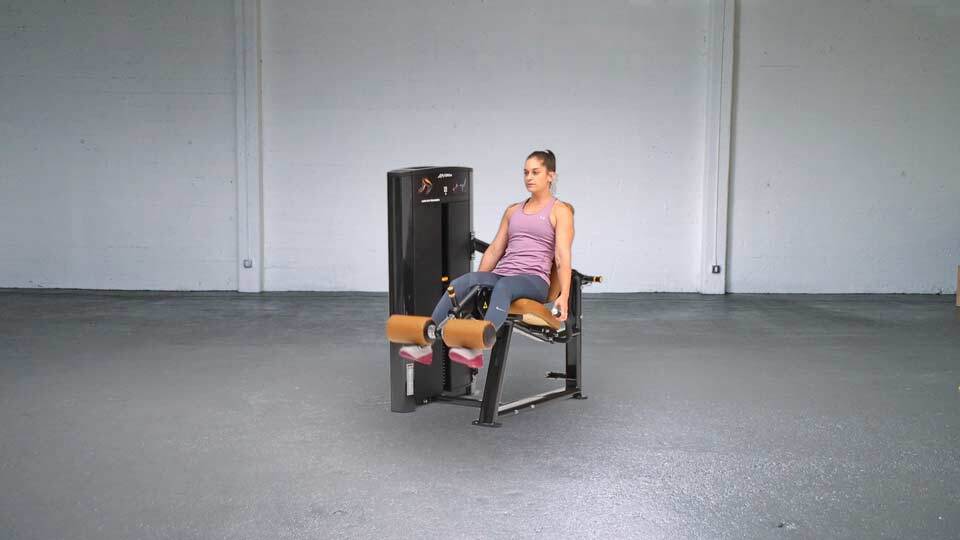 99.4 mSCORESWAPPED 20 TIMES
Leg Extensions are an isolation exercise that target the quads. Due to a severe lack of isolation movements for the lower body, this is a great option for specifically targeting your quadriceps. The use of a machine restricts your range of motion, and adds some stability to the movement. This can help your focus more on exertion than stabilizing the movement. The downside to this exercise is that it places a lot of tension on your knee. Keep your weights light, and focus on pausing near the end of your range of motion.
3. TRX Squat
 40.6 mSCORESWAPPED 16 TIMES
TRX Squat is an easier variation of squats. Like other squats, this compound movement primarily targets your quadriceps. By grasping the TRX straps, you can help support yourself as you descend into the squat, as well as being able to assist yourself as you return to a standing position. This can be a good starting point for building the strength needed to perform more challenging squat variations.
4. Machine Leg Press
 95.1 mSCORESWAPPED 10 TIMES
Machine Leg Press is a variation on the more standard Leg Press. Like the Leg Press, this is a compound exercise that primarily recruits the quadriceps. This is a great exercise for building strength and muscle mass in your quads. The use of a machine doesn’t change anything significant about this exercise, although your positioning may change depending on the machine you’re using.
5. Lunge
 90.8 mSCORESWAPPED 10 TIMES
Lunges are one of the most common lower body exercises out there. It’s a compound exercise that primarily targets your quads. In order to return to a standing position with this exercise you need to engage your quads in order to push yourself back up. This further emphasizes your quadriceps compared to other Lunge variations, however this also places more tension on your knee. By stepping forward with a single leg taking most of the load, you can more easily identify, and address any discrepancies in mobility or strength between sides.
6. Walking Lunge
 73.5 mSCORESWAPPED 9 TIMES
Walking Lunges are a compound exercise that primarily targets your quadriceps, glutes, and hamstrings. This variation involves stepping forward into a lunge and then continuing to walk forward, adding a dynamic element to the movement. This exercise is excellent for improving balance, coordination, and functional strength, making it a great addition to lower body workouts.
7. Bodyweight Bulgarian Split Squat
 46.9 mSCORESWAPPED 8 TIMES
Bodyweight Bulgarian Split Squat is a compound exercise that’s somewhere between a Squat and a Lunge. It primarily targets your quads. By placing your back leg on a flat bench, you add some instability to the movement, while also further emphasizing your quadriceps. This is a great exercise for developing strength, power, and stability in your lower body without any additional weight.
- Intermediate
- Quads
- Flat Bench
8. Hack Squat
 90.1 mSCORESWAPPED 8 TIMES
Hack Squat is a variation of squats that utilizes a specific machine to add resistance. Like other squat variations, this exercise primarily targets your quads. The use of a machine can assist you by redistricting your range of motion more than with the use of free weights, as well as adds more stability to the movement.