How to do a Dumbbell Lateral Raise To Front Raise
Reviewed by Jim Parker, CPT, B.A. Kinesiology
About this exercise
- Sets Logged
- 280,471
- Popularity Rank
- 249th
- Difficulty
- Beginner
- Shoulders Strength
- 91 mSCORE 22nd
- Equipment Required

Workouts with Dumbbell Lateral Raise To Front Raise
Target muscles worked
Instructions for Proper Form
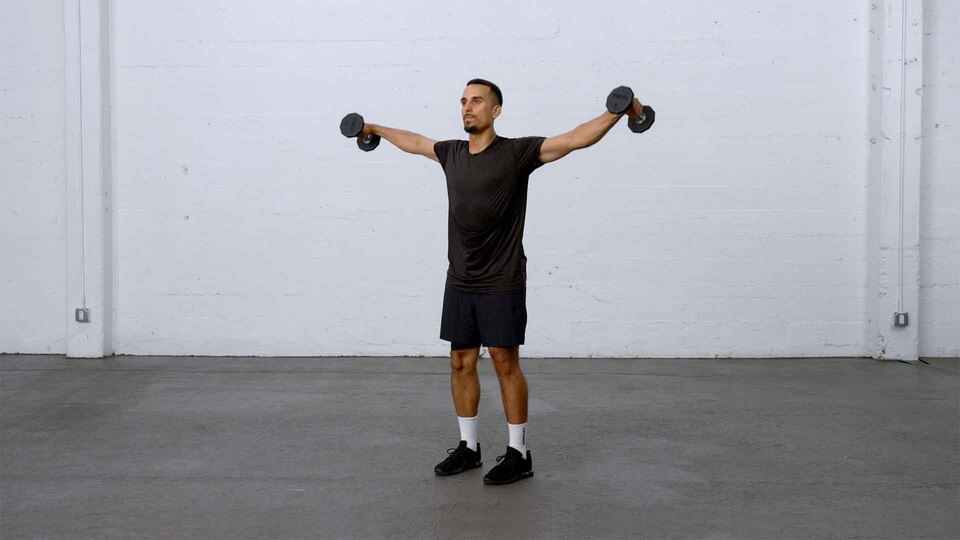
Dumbbell Lateral Raise to Front Raise is a combination of both Shoulder Raise, and Front Raise. Both movements in this exercise are isolation movements that primarily target the shoulder. By performing these exercises together, you can more completely target your shoulders than by using one of these two movements.
- Grasp a dumbbell in each hand and hold them at your sides, palms facing your legs.
- Stand with your feet hip-width apart and bend your knees slightly.
- Keep your core engaged, back straight, and gaze forward to maintain proper posture throughout this exercise.
- Engage your shoulder to raise the dumbbells out to either side. Your palms should be facing down at the top of the movement.
- Hold this position before slowly returning the dumbbells to the starting position.
- Engage your shoulders again to raise the dumbbells out in front of you.
- As you raise the dumbbells this time, rotate your wrist 90 degrees such that your palms are facing down at the end of the movement.
- Maintain tension in your shoulders as you slowly return to the starting position.
- Continue alternating between a lateral and front raise for the duration of the exercise.
- Completing both is considered one rep.
Common Form Mistakes
Swinging the Dumbbells
Using momentum, or recruiting additional muscle groups can help you lift heavier weights with this exercise. However it also reduces the effectiveness, and increases the risk of injury. Keep your weights on the lighter side, and focus on controlling the weight. If you’re struggling, consider using a seated variation. This can help you prevent swinging the dumbbells or adding additional movements to this exercise.
Limit Range of Motion
Raising the weight too high can increase your risk of injury, and isn’t particularly beneficial for these exercises. Limit your range of motion to around shoulder height. If you’re looking to make the exercise more challenging consider pausing for a moment at the top of the movement.
High Resistance
Extending your arms away from your body increases the tension placed on your joint’s and muscles. Keep the resistance for this exercise fairly light, and focus on moving slowly, and controlling the movement before you add more resistance.
Weight & 1 Rep Max Calculator
Average Dumbbell Lateral Raise To Front Raise standards by male, female, weight, age and height
Use this calculator to see Fitbod's possible first recommendations for you. This would be your starting line, based on more than 4.5 billion logged sets from 1.1 million users.

- beginner8reps12.5lbs1 Rep Max15lbs
- intermediate8reps15lbs20lbs
- advanced8reps17.5lbs22.5lbs
Enter your stats to calculate your Reps & Weight
Alternatives & Variations to Dumbbell Lateral Raise To Front Raise
1. Dumbbell Lateral Raise
 95.5 mSCORESWAPPED 1,377 TIMES
An isolation exercise using dumbbells to raise the arms sideways, targeting the deltoid muscles.
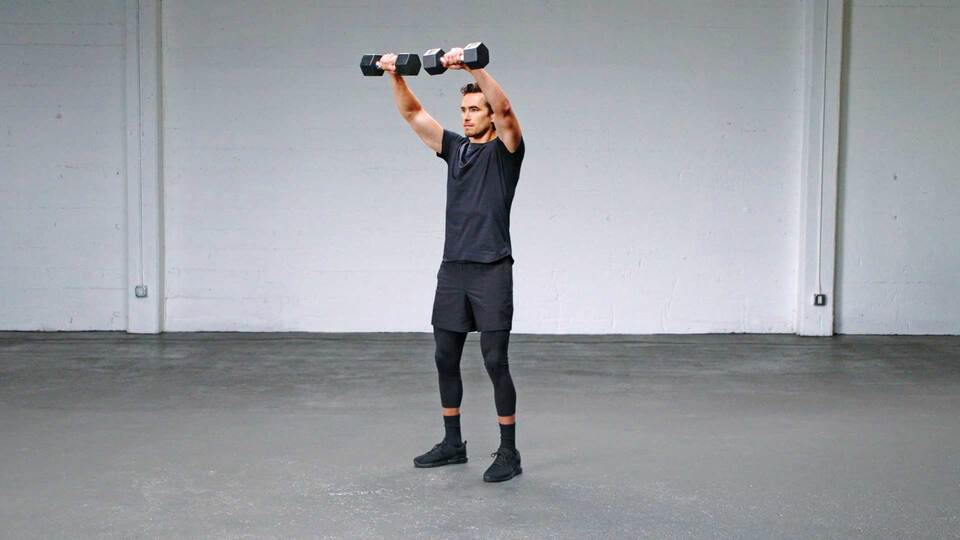
2. Dumbbell Front Raise
 98.6 mSCORESWAPPED 796 TIMES
Dumbbell Front Raise is an isolation exercise that primarily targets the shoulders, more specifically the anterior deltoid (front of the shoulder). This is a very common shoulder exercise, and can work well to isolate the shoulders to build strength and muscle mass. By using dumbbells, you can help identify and address any strength imbalances between sides.
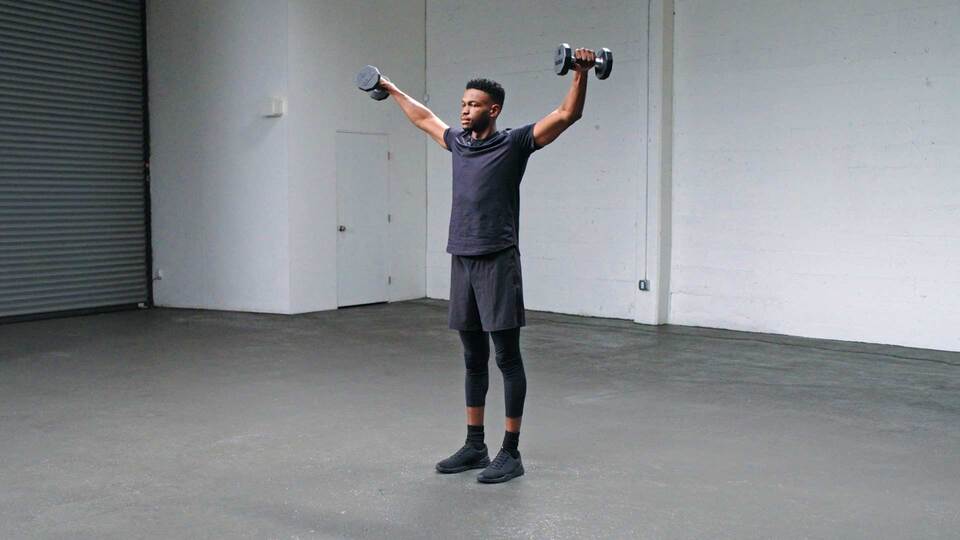
3. Dumbbell Shoulder Raise
 97.8 mSCORESWAPPED 574 TIMES
Dumbbell Shoulder Raise is an isolation exercise that primarily targets the shoulders, more specifically the medial deltoid (middle of the shoulder). This is a very common shoulder exercise and can work well for building muscle mass and strengthening the shoulders. By using dumbbells, you can help identify and address any strength imbalances between sides.
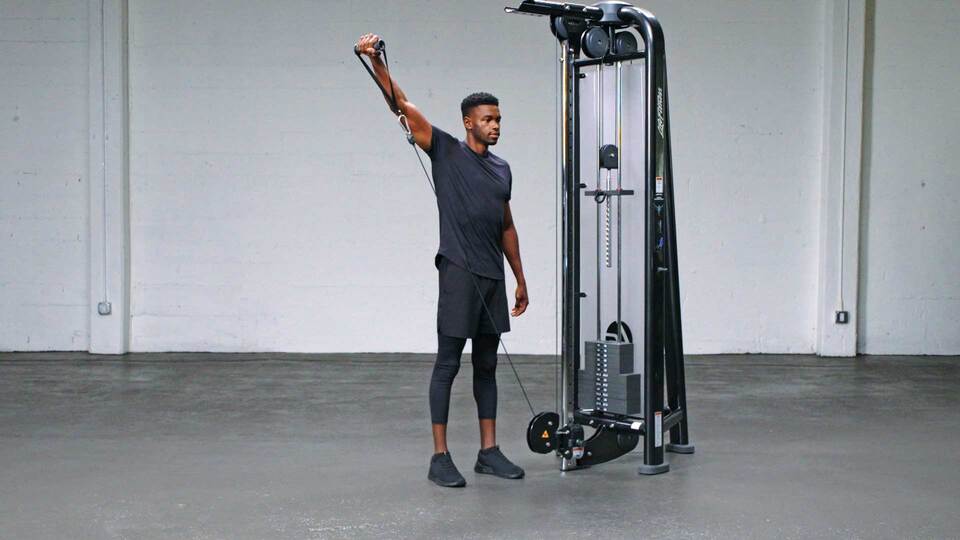
4. Cable Lateral Raise
 97.7 mSCORESWAPPED 475 TIMES
Cable Lateral Raise is a variation on the more standard Dumbbell Shoulder Raise. Similar to the Dumbbell Shoulder Raise, this isolation exercise primarily targets the shoulders, and more specifically the medial deltoid (middle of the shoulder). By using a cable machine, you have more control over the direction your resistance is coming from, and can easily make adjustments. In addition, by isolating each side of the body, you can more easily identify and address strength imbalances between sides.
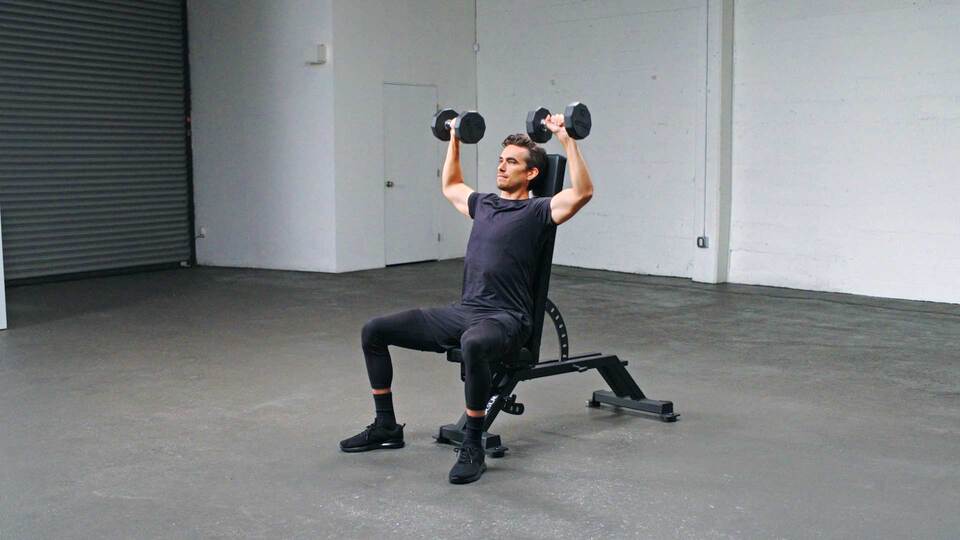
5. Dumbbell Shoulder Press
 99.5 mSCORESWAPPED 466 TIMES
Dumbbell Shoulder Press is a compound exercise that primarily targets the shoulders. The use of dumbbells allows for slightly more instability than with equipment like barbells. This can help you recruit and develop stabilizing muscles around the shoulders. In addition, by using dumbbells, you can help identify and address any strength imbalances between sides.
6. Dumbbell Standing Front Press
 64.1 mSCORESWAPPED 412 TIMES
Dumbbell Standing Front Press is a variation on the more standard Shoulder Press. Similar to other Shoulder Press variations, this compound exercise primarily targets your shoulders. The standing position helps improve overall balance and functional strength by engaging your core and stabilizing muscles more than a seated version. Using dumbbells ensures that each side of the body works equally, preventing compensating for any strength imbalances between sides.
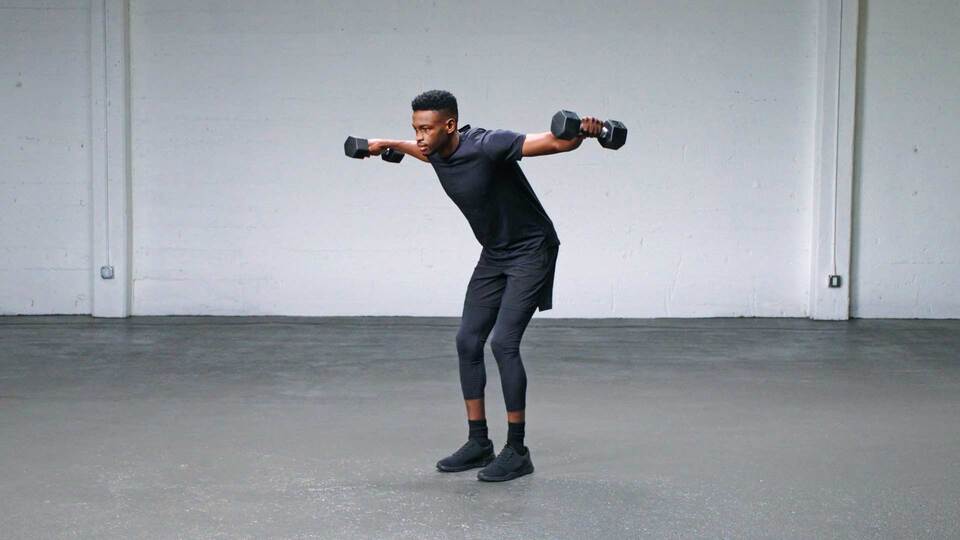
7. Dumbbell Rear Delt Raise
 94.7 mSCORESWAPPED 288 TIMES
Dumbbell Rear Delt Raise is a variation of Dumbbell Shoulder Raise. Similar to other shoulder raises, this is an isolation exercise that primarily targets the shoulders. By hinging your hips back, and leaning forward slightly, you can further emphasize your rear deltoids (back of the shoulder).
8. Dumbbell Cuban Shoulder Rotations
 43.6 mSCORESWAPPED 245 TIMES
Dumbbell Cuban Shoulder Rotation is a shoulder exercise that involves holding a dumbbell just above your head with your elbows out to each side, and then rotating your forearms forwards. It’s a great exercise for gaining strength and improving mobility in your shoulders, especially your rotator cuff.
9. Side Laterals to Front Raise
 73.6 mSCORESWAPPED 224 TIMES
Side Laterals to Front Raise is a variation of both Shoulder Raise and Front Raise. This exercise involves raising the weight out to either side, then bringing the dumbbells together in front of you. The benefit of this variation is that both positions target different parts of the shoulder. This ensures that you’re training your shoulders more completely.
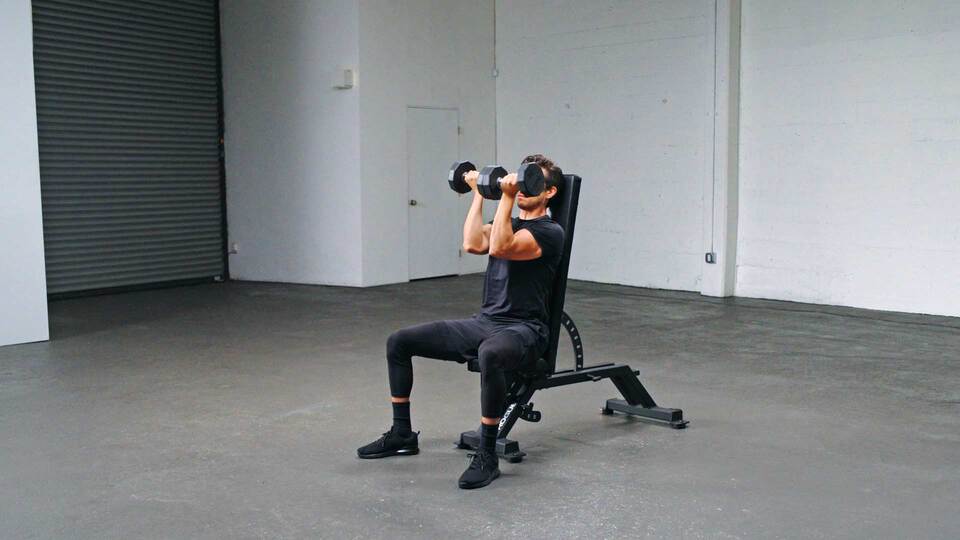
10. Arnold Dumbbell Press
 93.2 mSCORESWAPPED 224 TIMES
Arnold Dumbbell Press is a compound movement that primarily targets the shoulders. The difference between the Arnold Press and a standard Shoulder Press is that you bring the dumbbells in front of you at the bottom of the movement rather than stopping when they reach your shoulders. Bringing the dumbbells in front of you can be more a comfortable movement as well as improve muscle activation.