Best Back Workouts With Cable Machines
About
Cables are an incredibly versatile piece of exercise equipment that offer unique benefits due to their adjustable resistance angles.
They enable precise muscle activation by allowing variations in handle attachments, providing tailored exercise experiences suitable for individual needs.
The back muscles, located on the upper posterior torso, play crucial roles in pulling motions and other shoulder movements.
Common exercises targeting these muscles include rows, pull-ups, and lat pull-downs, all of which can be effectively performed using cable machines.
Incorporating cable pulls into your routine enhances back engagement and overall workout efficiency.
If you’re not training your back with cables, then you may not be targeting your back muscles from all angles and you could be missing out on some key components for growing a bigger and stronger back.
Anatomy Of Back Muscles
The back comprises a few different muscles: latissimus dorsi, spinal erectors, and traps. Each of these muscles works to pull objects into the body or helps to support the back under load.
Latissimus Dorsi
The lats span the entire upper back and their muscle fibers run diagonally. Due to the angle at which these muscle fibers run, you need to make sure to train the lats with both horizontal (i.e. rows) and vertical (i.e. pulldowns) pulling movements to target them effectively.
Spinal Erectors and Multifidus
The spinal erectors and multifidus muscles make up what is known as the lower back and are responsible for supporting the spine during movement. They also work to extend the back (bend the torso backward) when contracted.
You can train these muscles by doing back raises or any movement that is performed in a “bent over” position. Most workout plans include free weight exercises like deadlifts and squats that work the lower back.
Trapezius
The trapezius muscle spans the entire back of the body and consists of three different parts based on the direction of the muscle fibers, which are classified as the upper, middle, and lower traps.
The upper trap is the most notable section of the traps, running across the upper back, and is responsible for elevating the shoulder blades (shrugging movements, aka scapular elevation).
The middle trap runs along the spine and helps assist the upper traps, and supports good posture.
The lower traps sit lower on the back and help to maintain posture while also keeping the shoulder blades pulled down (scapular depression).
Rhomboids
The rhomboids are small yet important muscles that run between the shoulderblades. These muscles help to pull the shoulder blades together (retraction) as well as support the shoulder girdle during pressing and pulling movements.
Benefits Of Cable Back Exercises
Below are three benefits of performing back exercises with cables.
Train in a Non-Fixed Range of Motion:
Cables allow you to train the muscles in a non-fixed path, meaning that you can adjust them more easily to suit your needs and preferences.
This can help increase muscle growth and coordination by working around any movement restrictions or discomfort you may have when training with dumbbells or barbells.
While free weights are less fixed movements than machines, they still have some limitations. Cables do not directly work against gravity, so you can load the muscle from all angles rather than moving the loads in a vertical up-and-down plane.
Can Train Back from All Angles:
Similar to the benefit above, cables allow you to truly attack the back from all angles as you are not working directly against the downward force of gravity.
If you only train your back using dumbbells or barbells, then it will be tough to isolate all muscle fibers of the back because you cannot do vertical pulling movements with free weights. While you could throw in some pull-ups to supplement your free weight training, not everyone is capable of doing pull-ups for multiple sets.
Using the cables for back exercises allows you to target the back from every angle, regardless of your experience level (beginner, intermediate, advanced) or strength capacity.
Easy to Set Up:
Cables allow you to train all back exercises quickly and easily, as all you need to do is change the position of the cable, switch out the attachments, and change the weight on the stack.
Unlike barbells or dumbbells (which can still be effective for building back muscles), cables allow you to make your workouts more time and space efficient.
This is ideal when training in circuits or with a partner, as you can easily change the movement or weight without wasting time.
Frequently Asked Questions
Are Cables Good For Back Training?
Cables are great for building back muscles as they allow you to train the back at all angles while keeping tension on the muscles at all times. If you can train the back with various loads and the weights are heavy enough, you could do all your back workouts with cables and get great muscle growth!
Can You Build A Bigger Back Using Only Cables?
Yes, if you do both pulldown and rowing exercises multiple times a week with various rep ranges and loading, you can 100% get a bigger back. Many lifters prefer cables because they keep constant tension on the muscle and help you train the back from all angles easily (by adjusting the pulleys).



The 12 Best Back Exercises with Cable Machines
Ranked By
Ranked based on Fitbod's internal data set of the most effective exercises. Learn More
1. Cable Row
Cable Row demonstration video — proper form for this exercise. SETS LOGGED6,108,322Back Strength98 mScoreBack Row Cable
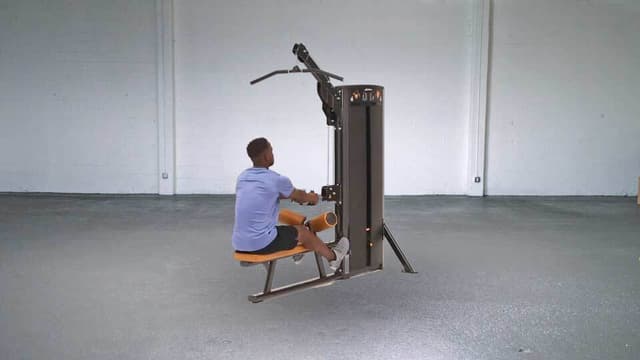
The Cable Row is an exercise that strengthens your back, shoulders, and biceps. It uses a cable machine for proper positioning and resistance control, helping you build muscle and strength in your upper body.
How to do it
- Sit on the bench and place your feet on the foot plates.
- Hold the handle with both hands, keeping your back straight.
- Pull the handle towards your torso while leaning back slightly.
- Squeeze your shoulder blades together at the end of the movement.
- Slowly return to the starting position while maintaining tension in your back.
Sets, Reps, Weight18reps55lbs28reps55lbs38reps55lbs2. Lat Pulldown
Lat Pulldown demonstration video — proper form for this exercise. SETS LOGGED8,113,246Back Strength100 mScoreBack Lat Pulldown Cable
The Lat Pulldown is a great exercise for strengthening your back, shoulders, and biceps. It's similar to a Pull Up but is more stable, making it easier for beginners to control the movement and adjust the resistance.
How to do it
- Attach a bar to the pull-down pulley and grip it with your hands shoulder-width apart, palms facing forward.
- Sit upright on the seat, placing your knees under the adjustable pad.
- Engage your core and keep your spine straight.
- Pull the bar down towards your chest by bending your elbows, leaning back slightly.
- Slowly return the bar to the starting position.
Sets, Reps, Weight18reps70lbs28reps70lbs38reps70lbs3. Shotgun Row
Shotgun Row demonstration video — proper form for this exercise. SETS LOGGED1,315,194Back Strength92 mScoreBack Hi-Lo Pulley Cable
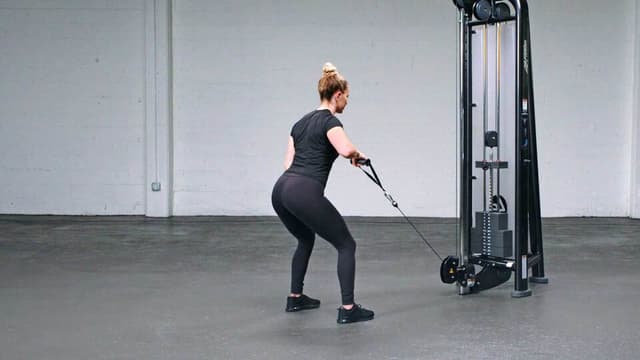
Shotgun Row is a back exercise that uses a cable machine. It targets each side separately, helping to improve strength balance and add variety to your routine.
How to do it
- Set the pulley at the lowest position with a handle attachment.
- Grip the handle with an overhand grip and step back about 2-3 feet, keeping your feet slightly wider than shoulder-width apart.
- Engage your core and hinge at your hips to lean forward slightly.
- Pull the handle with your right arm, bringing your elbow close to your side.
- Return the handle to the start position and repeat with your left arm.
Sets, Reps, Weight18reps30lbs28reps30lbs38reps30lbs4. V-Bar Pulldown
V-Bar Pulldown demonstration video — proper form for this exercise. SETS LOGGED1,241,504Back Strength80 mScoreBackLat Pulldown CableThe V-Bar Pulldown is an effective exercise for strengthening your upper back, focusing on the lats and middle back, while also engaging the biceps. Using a V-Bar with a neutral grip helps protect your shoulders and allows for a more comfortable movement.
How to do it
- Attach a V-bar to the pull-down machine.
- Grip the V-bar with your palms facing in.
- Sit upright with your knees secured under the pad.
- Keep your core tight and back straight.
- Pull the bar down towards your ribcage by bending your elbows.
- Return to the starting position by extending your arms.
Sets, Reps, Weight18reps70lbs28reps70lbs38reps70lbs5. Wide Grip Lat Pulldown
Wide Grip Lat Pulldown demonstration video — proper form for this exercise. SETS LOGGED1,293,747Back Strength86 mScoreBackLat Pulldown CableThe Wide Grip Lat Pulldown strengthens the upper back, lats, and biceps. By using a wider grip, this exercise helps improve back width and posture, making it great for building strength and enhancing your physique.
How to do it
- Attach a wide bar to the pull-down machine.
- Grip the bar with your hands wider than shoulder-width apart, palms facing forward.
- Sit on the seat and secure your knees under the pad.
- Keep your core tight and back straight.
- Pull the bar down towards your chest while leaning back slightly.
- Return to the starting position by extending your arms.
Sets, Reps, Weight18reps70lbs28reps70lbs38reps70lbs6. Reverse Grip Pull Down
Reverse Grip Pull Down demonstration video — proper form for this exercise. SETS LOGGED881,146Back Strength86 mScoreBackLat Pulldown CableThe Reverse Grip Pull Down is a back exercise that mainly works the lower lats and biceps. Using an underhand grip is gentler on your wrists and elbows, making it great for building strength and thickness in your back.
How to do it
- Sit up straight and place your thighs under the support pads.
- Grab the pull down bar with your palms facing you.
- Pull the bar down towards your upper chest by bending your elbows.
- Slowly return to the starting position.
Sets, Reps, Weight18reps65lbs28reps65lbs38reps65lbs7. 1/2 Kneeling Shotgun Row
1/2 Kneeling Shotgun Row demonstration video — proper form for this exercise. SETS LOGGED80,616Back Strength70 mScoreBackHi-Lo Pulley CableThe 1/2 Kneeling Shotgun Row is a great exercise for strengthening your back, shoulders, and core. It is done in a half-kneeling position using a cable machine, helping to improve muscle balance and posture while stabilizing your body.
How to do it
- Kneel in front of the cable machine with one knee on the ground.
- Set the cable pulley to your elbow height.
- Position yourself in a lunge with the other knee forward for support.
- Grip the cable with the hand on the same side as the grounded knee.
- Ensure there is tension on the cable with your arm extended.
- Engage your core and keep your back straight.
- Pull your elbow to your side using your back, biceps, and rear shoulder.
- Return to the starting position slowly.
- Switch sides and repeat for the set.
8. Single Arm Lat Pulldown
Single Arm Lat Pulldown demonstration video — proper form for this exercise. SETS LOGGED813,558Back Strength81 mScoreBackLat Pulldown CableThe Single Arm Lat Pulldown is an exercise that targets your back muscles while also helping with core stability. By using one arm at a time, it allows for better stretching and muscle balance in your back.
How to do it
- Attach a handle to the pull-down machine.
- Sit upright and place your knees under the adjustable pad.
- Grab the handle with your left hand in an overhand grip.
- Keep your core tight and back straight.
- Pull the handle down towards your ribcage, leaning back slightly.
- Return to the starting position and repeat with your right arm.
Sets, Reps, Weight18reps40lbs28reps40lbs38reps40lbs9. Straight-Arm Pulldown
Straight-Arm Pulldown demonstration video — proper form for this exercise. SETS LOGGED1,139,330Back Strength72 mScoreBackLat Pulldown CableThe Straight-Arm Pulldown is a back-targeting exercise. It helps you focus on your back muscles without using your biceps, and you can adjust your grip to target different areas of your back.
How to do it
- Set the pulley to the highest position with a straight bar attached.
- Stand back 1-2 feet with your feet shoulder-width apart.
- Extend your arms with slightly bent elbows and hold the bar above your head.
- Bend your hips slightly to lean your torso forward.
- Engage your core to maintain a straight back.
- Pull the bar down toward your hips while keeping your arms straight.
- Return the bar to the starting position.
Sets, Reps, Weight18reps45lbs28reps45lbs38reps45lbs10. Cable Crossover Lat Pulldown
Cable Crossover Lat Pulldown demonstration video — proper form for this exercise. SETS LOGGED120,014Back Strength65 mScoreBack Crossover Cable
The Cable Crossover Lat Pulldown is a back exercise that works the lat muscles using cables for a better range of motion. It helps build a wider and stronger back while improving posture.
How to do it
- Kneel between two cable machines and grab a handle in each hand with palms facing forward.
- Pull the handles down toward your body, letting your hands rotate inward as you do so.
- Hold the position briefly when your hands are near your torso, feeling the tension in your upper back.
- Slowly return the handles to the starting position while keeping tension in your back.
- Keep your core tight, chest up, and shoulders back throughout the exercise.
Sets, Reps, Weight18reps35lbs28reps35lbs38reps35lbs11. Cable Shrugs
Cable Shrugs demonstration video — proper form for this exercise. SETS LOGGED234,030Trapezius Strength98 mScoreTrapeziusCrossover CableCable shrugs are an exercise that targets your trapezius muscles using a cable machine. This variation keeps constant tension on your muscles, making it effective for building strength in your traps.
How to do it
- Set the pulleys to the lowest position.
- Grab a handle with each hand, using an overhand grip.
- Stand in the center of the cable machine with your feet shoulder-width apart and knees slightly bent.
- Lift your shoulders towards your ears, engaging your traps.
- Hold for a moment, then lower your shoulders back down slowly while keeping tension in your traps.
Sets, Reps, Weight18reps60lbs28reps60lbs38reps60lbs12. Cable Upright Row
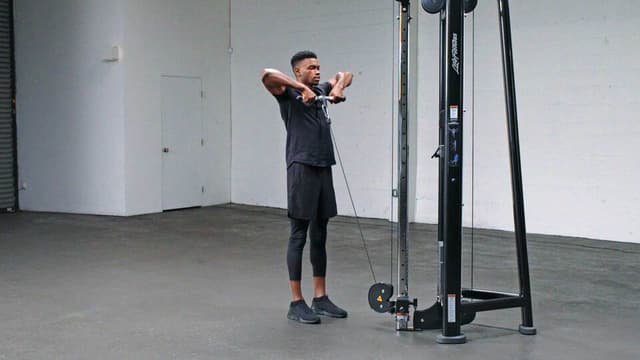
Cable Upright Row demonstration video — proper form for this exercise. SETS LOGGED535,737Trapezius Strength87 mScoreTrapeziusHi-Lo Pulley CableThe Cable Upright Row is a resistance exercise that strengthens your shoulders and upper back. Using a cable allows for better control and constant tension, making it effective for building muscle and strength.
How to do it
- Set the cable to its lowest position.
- Stand with your feet shoulder-width apart and grip the bar with your palms facing down.
- Pull the bar towards your chest, keeping your elbows above your shoulders and close to your body.
- Slowly return the bar to the starting position and repeat.
Sets, Reps, Weight18reps40lbs28reps40lbs38reps40lbs
Alternative Workouts
Alternative Workouts with Cable Machines
- Best Workouts With Cable Machines To Get Lean And Burn Fat
- Best Upper Body Workouts With Cable Machines
- Best Arms Workouts With Cable Machines
- Best Full Body Workouts With Cable Machines
- Best Pull Day Workouts With Cable Machines
- Best Push Day Workouts With Cable Machines
- Best Biceps Workouts With Cable Machines
- Best Triceps Workouts With Cable Machines
- Best Bicep And Shoulders Workouts With Cable Machines
- Best Abs Workouts With Cable Machines
- Best Chest And Back Workouts With Cable Machines
- Best Chest And Tricep Workouts With Cable Machines
- Best Beginner Workouts With Cable Machines
- Best Advanced Workouts With Cable Machines
- Best Workouts With Cable Machines To Build Muscle Mass
- Best Workouts With Cable Machines To Build Strength
- Best Workouts With Cable Machines For Women
- Best Workouts With Cable Machines For Men
- Best Core Workouts With Cable Machines
- Best Chest Workouts With Cable Machines
- Best Shoulders Workouts With Cable Machines
- Best Legs Workouts With Cable Machines
Alternative Back Workouts
- Best Back Workouts With Pull Up Bar
- Best Back Workouts With Trx
- Best Back Workouts With Kettlebells
- Best Back Workouts With Smith Machine
- Best Back Workouts With Flat Bench
- Best Back Workouts With Resistance Bands
- Best Back Workouts With Barbells
- Best Back Workouts With Garage Gym
- Best Back Workouts To Build Muscle Mass
- Best Advanced Back Workouts
- Best Back Workouts With Weight Machines
- Best Beginner Back Workouts
- Best Back Workouts For Women
- Best Back Workouts To Build Strength
- Best Back Workouts For Men
- Best Back Workouts To Get Lean And Burn Fat
- Best Back Workouts With Bodyweight
- Best Back Workouts With Dumbbells
Alternative Back Workouts with Cable Machines
- Best Back Workouts With Cable Machines To Build Strength
- Best Back Workouts With Cable Machines For Women
- Best Beginner Back Workouts With Cable Machines
- Best Advanced Back Workouts With Cable Machines
- Best Back Workouts With Cable Machines To Build Muscle Mass
- Best Back Workouts With Cable Machines To Get Lean And Burn Fat