


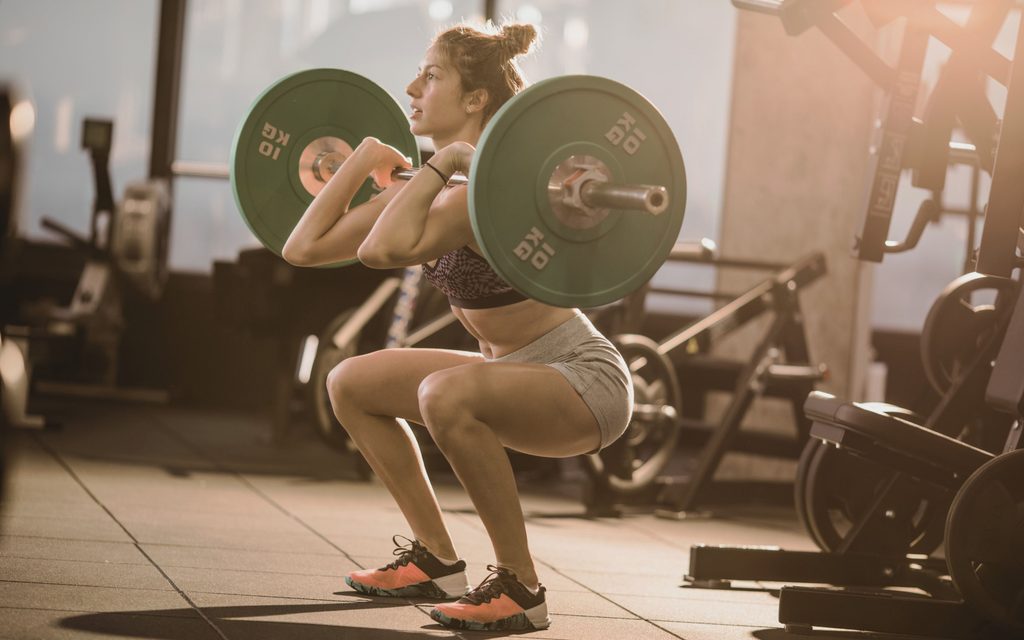
ChatGPT can give you a good workout. Most lifters who try it get a reasonable plan in seconds. The harder question is what happens after day one: Once you have a workout, how much work does each option take to run it, record what happened, and decide what to do next? We compared Fitbod vs ChatGPT to learn more.
We follow one lifter through both tools, from the first plan to a completed workout, a change in schedule, and a check on whether they’re getting stronger. Then we compare the two on progression, control, progress tracking, real-life constraints, and price.
The short answer:
Choose Fitbod if you want to train consistently, see measurable progress, and spend less time managing your own program. Fitbod generates each workout from your goal, equipment, schedule, and logged performance, then updates the next one as you train. It also tracks Estimated Strength (1RM), personal records, volume, and muscle recovery awareness for you.
ChatGPT works well if you enjoy managing your own program and are willing to keep your training history up to date in the conversation. It can personalize a plan, suggest weights, and revise a program when you give it feedback. You’re still the one who records the sets, carries the history forward, and decides when to change things.
Many lifters will get the most from using both: Fitbod to plan, log, and progress your training, and ChatGPT for questions, explanations, and ideas around it.
At a glance:
| Fitbod | ChatGPT | |
| What it is | A strength training app that generates, logs, and adapts workouts | A general-purpose AI assistant |
| Where your training history lives | A structured workout log of every set, rep, and weight, built as you train | Your chats, saved memories, project files, and anything you paste or upload |
| Specific weight recommendations | Recommended for every set, based on your logged performance | Available if you give it your recent lifts; you supply the numbers |
| Updating the next workout | Automatic after you log a session; logging Reps in Reserve refines it further | When you report results and ask for an update |
| Control and customization | Edit sets, reps, and weight; swap, add, or exclude exercises; save workouts; build from scratch; custom exercises | Fully open-ended: ask for any change in plain language |
| Progress tracking | Estimated Strength, personal records, volume, Strength Score, and exercise history | Whatever you track and share, such as a spreadsheet or notes |
| Muscle recovery | Estimated per-muscle recovery score from 0–100%, factored into each workout | No per-muscle recovery model; Health in ChatGPT can use Apple Health data (U.S., iPhone) |
| Exercise guidance | 1,600+ exercises with demonstration videos | Text explanations; can describe technique |
| In the gym | Built-in logging, rest timers, supersets and circuits, Apple Watch app, offline workouts | Record sets through chat or an external log; no dedicated set-logging interface. |
| Price (U.S.) | $15.99/month or $95.99/year, with a 7-day free trial for new users | Free tier available; paid plans add features |
| Best for | Lifters who want measurable progress with less programming work | Questions, explanations, brainstorming, and lifters who prefer to self-program |
Table of contents
- What a workout plan has to do after day one
- One lifter, two tools: a week-by-week walkthrough
- How does each option help you progress?
- How much control do you have?
- How do you know whether you’re improving?
- How does the plan handle real life?
- What about exercise guidance?
- What does each option cost?
- You can use both
- FAQs
- Final thoughts
What a workout plan has to do after day one
“Hey ChatGPT, write me a 4-day workout plan” has become one of the most common ways people start lifting. It’s fast, it costs nothing, and the result is usually reasonable. But a plan is the start of training, not the whole of it. To keep making progress, a new lifter needs to:
- Record what you actually lifted, not just what was planned
- Decide the weight, sets, and reps for the next session
- Notice which muscles are still fatigued
- Adjust when you have less time or different equipment
- Tell whether you’re actually getting stronger
ChatGPT can help with every one of these if you give it the information. Fitbod is built to handle them as part of the workout itself. That difference, in who does the ongoing work, is the real buying decision.
Fitbod combines several kinds of AI to do that work. Structured, rule-based planning organizes training into macrocycles, mesocycles, microcycles, and daily workouts. Machine learning, including neural networks, powers weight and rep recommendations.
One lifter, two tools: a week-by-week walkthrough
To keep the comparison fair, imagine the same lifter starting with the same information in both tools:
- Experience: Several years of lifting
- Goal: Build muscle
- Schedule: Three 45-minute sessions a week
- Equipment: A commercial gym with barbells, dumbbells, cables, and machines
- History: Recent working weights on their main lifts
Step 1: Getting the first plan
ChatGPT: The lifter describes their goal, schedule, equipment, and recent lifts. ChatGPT returns a weekly program with exercises, sets, reps, and, if asked, suggested starting weights based on the numbers provided. With Memory turned on, or with the details saved in a Project, the lifter doesn’t need to repeat this setup in every chat.
Fitbod: The lifter enters the same details once in their My Plan profile: goal, experience level, equipment, training split, and workout length. Fitbod generates today’s workout with specific sets, reps, and weights. With no history yet, the first recommendations are deliberately conservative and calibrated as the lifter logs sessions or adjusts the numbers.
Step 2: Doing the workout and recording it
ChatGPT: The plan lives in a chat. The lifter follows it in the gym and records actual sets, reps, and weights somewhere, such as a notes app, a spreadsheet, or a message back to ChatGPT. Keeping that record complete and accurate is up to them.
Fitbod: The plan and the log are the same screen. The lifter checks off each set, edits the weight or reps if they did something different, and can log Reps in Reserve (how many more reps they had left) after each exercise. Rest timers, supersets, and demonstration videos are built into the same flow.
The difference: With ChatGPT, the lifter keeps the training record. With Fitbod, the record builds as they log sets in the workout.
Step 3: Planning the next session
ChatGPT: The lifter shares what happened, for example “bench was 185 for 8, 8, 7; felt hard,” and asks for next week’s numbers. ChatGPT can suggest an adjustment and explain its reasoning. How good that adjustment is depends on how complete and current the shared history is.
Fitbod: The next workout already reflects the logged session. If a set feels easy, Fitbod gradually increases load or reps. If the lifter struggles, it eases off. It also varies intensity and volume across sessions on purpose, so some days are heavier and lower-rep and others lighter and higher-rep.
The difference: Both can adjust. ChatGPT adjusts when you ask and report results. Fitbod adjusts automatically from the log.
Step 4: Handling a change
In week three, the lifter’s schedule tightens to 30 minutes, and their gym’s squat rack is taken.
ChatGPT: The lifter explains the change and asks for a revised session. ChatGPT can rewrite the workout well. The lifter then needs to make sure the new plan still fits the weekly volume and progression they’ve been following.
Fitbod: The lifter changes today’s duration and equipment in Training Session Mods, or swaps a single exercise. Fitbod rebuilds the session around the new constraints while keeping the lifter’s logged strength, recovery, and history.
The difference: Both handle the change. Fitbod keeps the rest of the program connected to it without extra work from the lifter.
Step 5: Checking progress
ChatGPT: If the lifter has kept a consistent log and shares it, ChatGPT can analyze trends and even estimate one-rep maxes. Without that log, there’s nothing to analyze.
Fitbod: The lifter opens Exercise History or the Body tab to see Estimated Strength over time, personal records, volume, and Strength Score, all calculated from the sessions they’ve logged.
The difference: ChatGPT can analyze the history you bring. Fitbod keeps the history and the analysis in one place.
How does each option help you progress?
Progressive overload means gradually increasing the challenge, through weight, reps, or volume, so your body keeps adapting. It’s the core of getting stronger, and it’s where the ongoing work adds up.
In ChatGPT, progression is a conversation. ChatGPT can recommend specific weights and revise a program when you give it your recent performance, and with Memory or a Project it canremember earlier context. What it doesn’t do on its own is collect your sets. Each adjustment depends on you reporting what happened.
In Fitbod, progression is built into logging. According to Fitbod’s workout documentation, Fitbod:
- Tracks the weight, reps, and sets you complete, and gradually increases load or reps when you finish an exercise comfortably
- Eases future recommendations when you struggle with a set
- Uses your Reps in Reserve (RiR) ratings to refine future recommendations
- Deliberately varies intensity and volume between sessions rather than repeating the same prescription
- Periodically schedules Max Effort Days to reassess your strength
- Lowers weight recommendations after a training break to ease you back in
Fitbod reports that in 2025, its estimated one-rep max predictions landed within a 2.8% margin. That figure describes aggregate prediction accuracy across Fitbod’s data, not a guarantee for any individual lift, and recommendations get more precise the more you log. The same report found that users who adhered to Fitbod’s recommendations logged 24% more personal records in 2025 than those who didn’t. That’s an observed association among Fitbod users, not a controlled comparison and not a Fitbod-versus-ChatGPT result.
What this means for you: If you want to decide every progression yourself, ChatGPT can be a capable sounding board. If you’d rather log your sets and have the next workout already adjusted, that’s what Fitbod is built to do.
How much control do you have?
A common worry about workout apps is that they take decisions away from you. Experienced lifters especially want to train their own way.
ChatGPT is as flexible as it gets. You can ask for any split, rep scheme, or exercise in plain language, and it will rewrite the program.
Fitbod gives you control at several levels:
- Your plan: Set your goal, experience level, equipment, training split (full body, upper/lower, or push/pull/legs), workout duration, warm-ups and cooldowns, cardio, exercise variability, and supersets or circuits in My Plan.
- Each workout: Replace, add, or remove exercises and sets, or change the weight and reps on any set. Fitbod learns from those edits.
- Exercise preferences: Tell Fitbod to recommend an exercise more, less, or never.
- Your own workouts: Build a workout from scratch, or save a workout and reload it exactly as saved, with fresh sets, reps, and weights, or with updated weights only.
- Your own exercises: Create custom exercises for movements or machines that aren’t in the library, and log them in any workout.
Knowing the limits helps, too. Custom exercises are tracked in your history and count toward muscle recovery, but Fitbod doesn’t automatically recommend them or adjust their weights. You manage their progression yourself. Fitbod also doesn’t have a built-in weekly planner yet. Lifters who want a fixed week can save one workout per training day.
What this means for you: ChatGPT offers broad customization through natural language with you doing the bookkeeping. Fitbod offers substantial control over your workouts and lets you shape the plan while it keeps track of how each change affects your progression.
How do you know whether you’re improving?
Feeling stronger and being stronger aren’t always the same thing. Measuring progress takes consistent data.
ChatGPT can analyze your progress well if you give it a complete log, for example by uploading a spreadsheet to a Project. The analysis is only as good as the record you keep.
Fitbod calculates progress metrics from every logged session:
- Estimated Strength (1RM): your estimated one-rep max for weighted exercises, or estimated max reps for bodyweight exercises, tracked over time
- Personal records (PRs): for Estimated Strength, volume, reps, and weight on each exercise
- Volume: total sets × reps × weight
- Muscle Strength and Strength Score: relative strength for each muscle group and overall
- Benchmark Lifts: automatically identified key lifts, like the bench press, squat, and deadlift, with trends in the Body tab
These are estimates built from your training, and they have limits worth understanding. Estimated Strength can drop if you haven’t logged an exercise in a while. Strength Scores can dip temporarily when you change your exercise mix. Fitbod’s own guidance is to watch the long-term trend rather than week-to-week swings.
What this means for you: If measurable progress is what keeps you going, Fitbod gives you access to those numbers from the workouts you log.
How does the plan handle real life?
Most training plans break because of real life: travel, a packed week, a different gym.
ChatGPT handles a new constraint the moment you describe it, and it’s good at creative problem-solving, like a hotel-gym workout using only a cable machine.
Fitbod handles constraints inside the app:
- Time: Set today’s workout from 15 minutes to 1 hour 30 minutes, and Fitbod scales the number of exercises to fit.
- Equipment: Change today’s equipment for a new environment, or keep separate gym profiles. In 2025, Fitbod users trained at an average of 2.5 different gyms.
- Recovery: Fitbod estimates each muscle group’s recovery from 0% to 100% based on the sets, reps, and weight you’ve logged, and builds workouts around fresher muscles. You can override a recovery percentage if you feel ready sooner. Activities like runs, swims, and hikes logged through Apple Health or Google Health Connect also factor in. These are estimates informed by your training, not physiological measurements.
- Missed sessions and breaks: Fitbod has no catch-up schedule to fall behind on. Your next workout is built from your current recovery and history, and weights ease back after time away.
- No signal: Fitbod can generate and log workouts offline and syncs when you reconnect.
ChatGPT has added health context, too. Health in ChatGPT lets eligible U.S. users connect Apple Health (on iPhone) and supported medical records, so ChatGPT can consider activity, sleep, and workouts in its answers. That’s useful context. It isn’t a set-by-set training log or a per-muscle recovery model.
What this means for you: Both tools can adapt to a change. Fitbod adapts without you re-explaining your situation, and the change stays connected to your training history.
What about exercise guidance?
Fitbod includes more than 1,600 exercises with HD demonstration videos, so you can check an unfamiliar movement mid-workout. Its programming applies established training principles: goal-specific rep ranges, balanced training across muscle groups, weekly set targets, and recovery-aware exercise selection.
ChatGPT can explain technique in detail and answer follow-up questions about cues, setup, and common mistakes.
Neither tool can watch your form in real time. If you have an injury or a health condition, or you’re learning complex lifts, a qualified coach or clinician is worth the investment alongside either tool.
What does each option cost?
ChatGPT has a free tier, and paid plans add more capacity and features.
Fitbod costs $15.99 per month or $95.99 per year in the U.S., about $8 a month on the annual plan. Prices can vary by region, promotion, and platform. New users get a 7-day free trial, which renews into a paid plan unless you cancel before it ends. Eligible U.S. customers can also pay with HSA or FSA funds through Flex when subscribing on the Fitbod website. Flex determines eligibility.
What this means for you: ChatGPT costs less up front. You put in the logging, progression decisions, and recovery tracking yourself. Fitbod’s annual price is about what a single session costs with many personal trainers, and it plans and tracks every workout for the year.
You can use both.
“Fitbod or ChatGPT” doesn’t have to be either/or. There are three different experiences to know about:
- ChatGPT on its own: Great for learning (what RPE means, why deloads help), nutrition ideas, planning around a busy week, and questions you’d feel awkward asking at the gym. Paste in your Fitbod numbers and it can help you think through them.
- The Fitbod mobile app: Where your training happens. It plans, logs, measures, and adapts your workouts, and it holds your full training history, recovery estimates, and progress metrics.
- The Fitbod app inside ChatGPT: Ask for a workout in a ChatGPT conversation, like “a 30-minute chest workout with dumbbells,” and the Fitbod app in ChatGPT returns a complete workout with exercises, sets, reps, weights, and step-by-step form tips. It’s a fast way to get a Fitbod-generated workout where you’re already chatting. The full logging, history, and progress tracking described in this article live in the mobile app.
A practical setup for many lifters: train and log in Fitbod, and use ChatGPT, on its own or through the Fitbod app, for questions, ideas, and quick workouts along the way.
FAQs
- Can ChatGPT make a good workout plan? Yes. Give ChatGPT your goal, schedule, equipment, and recent lifts, and it can produce a solid, personalized plan, including suggested weights. The ongoing work is up to you: recording each session, sharing results, and asking for updates.
- Is Fitbod better than ChatGPT for strength training? For lifters who want progression, tracking, and recovery handled as part of their workouts, Fitbod is the more complete tool. It builds each session from your logged performance and tracks your progress automatically. ChatGPT suits people who prefer to self-program and keep their own records.
- Can ChatGPT track my workout progress? Only from what you give it. ChatGPT can remember context through Memory, use files in a Project, and, through Health in ChatGPT, use Apple Health data in the U.S. It doesn’t keep a structured set-by-set log for you the way a dedicated training app does.
- Does Fitbod use AI? Yes, more than one kind. Fitbod combines structured, rule-based planning (macrocycle, mesocycle, microcycle, and daily workouts), machine learning (including neural networks behind its weight and rep recommendations), and conversational AI for chat and insights.
- How accurate are Fitbod’s weight recommendations? Fitbod reports that its 2025 estimated one-rep max predictions landed within a 2.8% margin across its data. Your first recommendations are deliberately conservative and get more precise as you log workouts, rate Reps in Reserve, and complete Max Effort Days.
- Can I customize my workouts in Fitbod? Yes. You can edit sets, reps, and weights; swap, add, or exclude exercises; build workouts from scratch; save and reload workouts; and create custom exercises. Custom exercises are logged and count toward recovery, but Fitbod doesn’t automatically recommend them or adjust their weights.
- How much does Fitbod cost? In the U.S., Fitbod costs $15.99 per month or $95.99 per year, with a 7-day free trial for new users. Prices can vary by region and platform, and eligible U.S. customers can pay with HSA or FSA funds through Flex on the Fitbod website.
- Can I use Fitbod inside ChatGPT? Yes. The Fitbod app in ChatGPT generates complete workouts on request. Workout logging, training history, and progress tracking are in the Fitbod mobile app.
Final thoughts
Getting a first workout plan is easier than ever. The challenge is keeping it appropriate as your performance, schedule, and needs change. Fitbod connects the workout you’re given, the work you actually complete, and the recommendations for your next session, so you can keep progressing with less guesswork.
Fitbod is built for that part. It uses your logged training to inform future recommendations, so you spend your time training instead of managing a program.
Start your 7-day free trial of Fitbod, set up your plan in a few minutes, and log your first workout today.
