


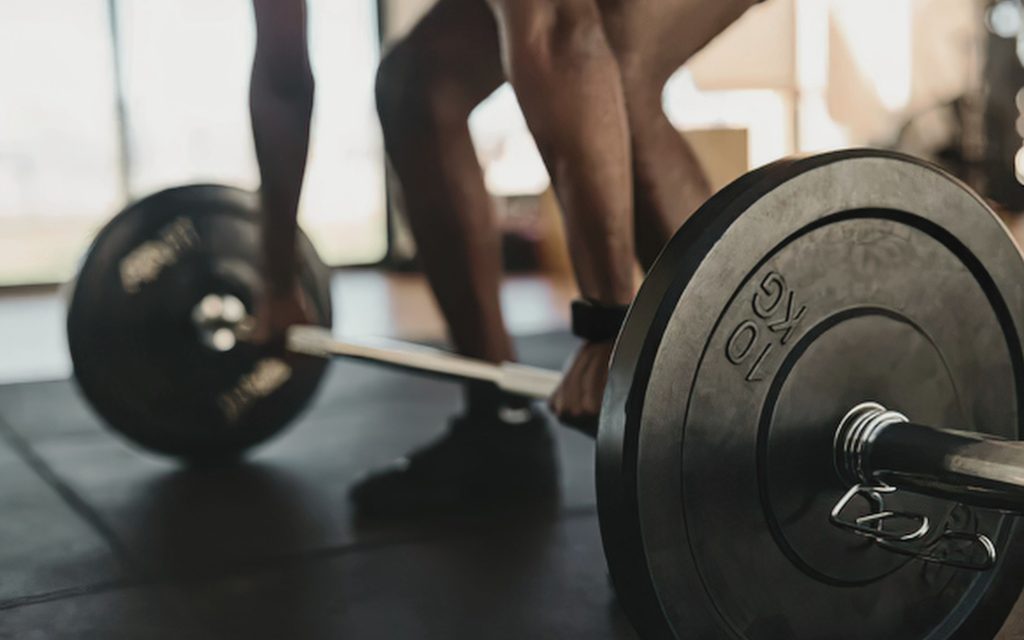
You finish 10 dumbbell presses with 50 pounds in each hand. Next time, you could try 55 pounds. Or you could keep the same dumbbells and complete an extra rep. So do more reps or more weight lead more progress?
Yes. Making your training more demanding over time is called progressive overload, one of the most well-established principles in exercise science, reaffirmed in the American College of Sports Medicine’s 2026 position stand on resistance training, its first major update in 17 years. Adding weight is one way to apply it. Adding reps is another.
We looked at how Fitbod users actually make this choice across millions of logged sets, then compared their later strength progress. People who usually added reps and people who usually added weight showed similar gains in estimated strength. Neither pattern had a clear advantage, a finding that also lines up with a controlled trial published in PeerJ.
Key Takeaways
- Reps and weight produced statistically similar strength gains. Across roughly 15,000 person-and-exercise histories, users who usually added reps gained 2.7% in estimated strength; users who usually added weight gained 3.0%. After adjusting for starting strength, experience, and other factors, the difference was close to zero.
- The exercise matters more than the person. On Leg Press, 91% of increases were weight-based; on Front Plate Raise, 74% were rep-based. The “right” choice depends heavily on which movement you’re doing.
- Most lifters use both methods, not just one. 60% of nearly 14,000 users added reps in at least one Dumbbell Bench Press workout and weight in another, within the same five-workout window.
- Equipment increments nudge the decision. When the next available dumbbell/kettlebell jump was proportionally larger, users were more likely to add reps instead of moving up in weight.
- Apparent gender and experience gaps mostly disappear once you control for exercise selection. Women and men converged near 34% rep-first; beginners and advanced lifters converged near 36–37%.
- As lifters gain experience with an exercise, they deviate from Fitbod’s recommendation less often and when they do deviate, reps make up a growing share of those changes (28% → 33% between sessions 1–5 and 16–20).
- This mirrors independent peer-reviewed research. A 2022 randomized trial by Plotkin et al. found both load progression and rep progression were “viable strategies” for strength and hypertrophy over 8 weeks.
How We Defined “Adding Reps” vs. “Adding Weight”
Fitbod recommends a weight and a number of repetitions, or reps, for each set. We compared those recommendations with what people logged.
Suppose Fitbod recommends 10 reps with a 20-pound dumbbell. We counted two clear ways to do more:
- More reps: log 12 reps with the same 20 pounds.
- More weight: log 10 reps with 25 pounds.
Fitbod data snapshot: Across more than 30 million such changes sets logged between September 2025 and August 2026 about 70% added weight and 30% added reps. We looked separately at sets where both numbers increased at once.
One distinction matters throughout this article: “more” means more than Fitbod recommended, not necessarily more than the previous workout. A change can reflect a training choice, a recommendation that felt too easy, or different equipment than the app expected.
These records tell us what people changed. To study strength progress, we needed to follow them into later workouts.
The Main Finding: Reps and Weight Produced Similar Strength Gains
How We Measured Progress
We studied each person one exercise at a time. Someone can favor extra weight on squats and extra reps on curls. For each person and exercise, we used the first five qualifying workouts with a clear choice between adding reps and adding weight. If at least four favored reps, we called that pattern rep-first; if at least four favored weight, weight-first. These were not necessarily the person’s first five workouts ever.
We then examined later max-rep sets where the aim is to complete as many good reps as possible at a given weight and used the logged weight and reps to estimate each person’s estimated one-rep max (e1RM). This lets us compare performances across different weights and rep counts without asking everyone to attempt a true maximum-weight lift.
The Results
Sample: About 11,000 users, roughly 15,000 person-and-exercise histories, across 35 exercises. We compared early and later strength estimates from two measurement periods about four and a half months apart.
| Earlier editing pattern | Gain in estimated strength |
| Usually added reps | 2.7% |
| Usually added weight | 3.0% |
After putting both groups on the same mix of exercises, and accounting for starting strength, training experience, goal, gender, weight units, and timing, the difference was close to zero. Small advantages in either direction remained compatible with the data. We also checked several e1RM formulas, including Fitbod’s in-house formula and a modified Brzycki formula the conclusion held.
This was not a randomized experiment. It describes users who kept logging the exercise and had suitable max-rep records in both periods. It’s not conclusive evidence that the two methods produce identical results for everyone.
The Research Backs This Up: What a Controlled Trial Found
Observational data can only show correlation, so it’s worth checking against a study designed to test causation directly. In a 2022 trial published in PeerJ, Dr. Daniel Plotkin and colleagues randomly assigned 43 trained adults to two lower-body training programs over 8 weeks. One group (LOAD) increased weight while keeping the rep range steady; the other (REPS) increased reps while keeping weight steady.
Both approaches produced similar improvements across most measures of strength, muscle growth, and endurance. Strength gains slightly favored the load-progression group (about a 2 kg advantage in squat 1RM), while growth in one measured thigh muscle (rectus femoris) slightly favored the rep-progression group. Both differences were small enough that the researchers concluded both approaches were viable ways to progress. (Read the full study.)
Our findings corroborate that practical conclusion in a very different setting: ordinary logged workouts from real Fitbod users, rather than a supervised lab protocol. Note that our analysis measured estimated strength, not muscle growth so it speaks to the strength side of Plotkin et al.’s findings more directly than the hypertrophy side.
Why the Exercise You’re Doing Changes the Answer
“Do lifters add reps or weight?” has no single answer. Compare these exercises. The table counts only changes where one number increased above the recommendation and the other stayed the same; it excludes unchanged sets and sets where both numbers increased.
| Exercise | Added reps | Added weight |
| Front Plate Raise | 74% | 26% |
| Palms-Up Dumbbell Wrist Curl | 67% | 33% |
| Dumbbell Floor Press | 59% | 41% |
| Dumbbell Bench Press | 52% | 48% |
| Dumbbell Lateral Raise | 48% | 52% |
| Barbell Bench Press | 20% | 80% |
| Deadlift | 13% | 87% |
| Leg Press | 9% | 91% |
The bench-press comparison stands out: with a barbell, four out of five of these changes added weight; with dumbbells, the split was almost even. At the other end, nearly three out of four changes on Front Plate Raise added reps; a lifter who reaches for a heavier barbell but keeps the same plate for extra raises fits a common pattern in these logs.
These are descriptions, not rules. The table doesn’t say adding weight is objectively better for deadlifts, or that adding reps is objectively better for raises.
Most Lifters Use Both Methods Even on the Same Exercise
An even split across all users could hide two separate camps: one group that always adds reps, another that always adds weight. That’s not what we found.
Among nearly 14,000 users with five qualifying Dumbbell Bench Press workouts, 60% added reps in at least one of those workouts and weight in another. Dumbbell Row showed almost the same pattern.
There’s another meaning of “both”: increasing reps and weight in the same set. When we included all three ways to increase a recommendation, simultaneous increases accounted for 23% on Seated Machine Calf Press and 21% on Cable Crunch. Alternating between extra reps and extra weight is not the same as increasing both at once both patterns appear in the data.
Why Equipment Increments Push People Toward Reps
Consider a rack with 20-pound and 25-pound dumbbells. Moving to the next pair adds 25% more weight per hand. Going from 50 to 55 pounds adds only 10%. “Just add five pounds” means something very different in those two situations.
We checked the available weights recorded in Fitbod for dumbbells, kettlebells, and medicine balls. When the next listed weight was a larger proportional jump, users were more likely to add reps instead a pattern that held even when comparing the same person doing the same exercise, while accounting for the recommended reps and weight.
That’s a relationship in the logs, not proof that the equipment caused the choice. But it gives a concrete, mechanical reason why the next step might be an extra rep rather than the next dumbbell.
The equipment records also exposed a limitation: some users logged weights that weren’t on their recorded equipment list (for example, a 15 kg recommendation became a 16 kg log, even though the next listed Fitbod weight was 17.5 kg). We can’t tell whether the list was incomplete or the user had a different rack that day. A weight change isn’t always a clean signal of a preference for heavier training. We also checked whether pounds-vs-kilograms users favored different changes; that comparison was too sensitive to equipment-list mismatches to support a simple claim about either group.
Does Gender or Training Experience Change the Pattern?
Women initially appeared more likely than men to be rep-first. Beginners appeared more likely than advanced lifters to be rep-first, too. But these groups logged different exercises and exercise choice, as shown above, is a major driver of the reps-vs-weight decision. We recalculated the comparisons as if each group had logged the same mix of exercises, and the gaps became much smaller.
| Comparison | Rep-first share after matching exercise mix |
| Women | 34% |
| Men | 34% |
| Beginners | 36% |
| Advanced lifters | 37% |
We also found no clear strength-progress advantage for either approach within the gender, experience, or training-goal groups we checked. Beginners had larger estimated gains than advanced lifters in this selected sample, but neither approach clearly won within either experience group.
Training goals offered a useful cautionary example. People with a strength goal initially looked more likely to add reps than people with a bodybuilding goal but strength-goal users received lower rep recommendations (about eight reps vs. ten, on average, in the sample we checked). Once we accounted for the recommended reps, strength-goal users were actually less likely to have a rep-first pattern. Being more likely to add reps to a lower target doesn’t mean someone prefers higher-rep training. Adding two reps to a target of six still leaves you below a target of ten.
How the Reps-vs-Weight Pattern Shifts as You Gain Experience with an Exercise
We also followed people from the first time they logged an exercise in Fitbod (not necessarily the first time they’d ever done it) and compared their first five sessions with sessions 16–20 on the same exercise.
The biggest change was simple: people edited the recommendation less often. Across roughly 82,000 person-and-exercise histories, the average share of sets logged with exactly the recommended reps and weight rose from 49.5% to 62.7%. Both rep increases and weight increases became less common weight increases declined more.
Restricting to histories with at least three single-number increases in each period (about 12,000 histories), reps’ average share of those increases rose from 28% to 33%. That doesn’t mean people added reps more often overall they made fewer increases in general, and reps accounted for a larger share of the ones that remained.
Some exercises shifted more than others:
| Exercise | Rep share, sessions 1–5 | Rep share, sessions 16–20 | People compared |
| Dumbbell Rear Delt Raise | 42% | 62% | 115 |
| Barbell Curl | 12% | 25% | 270 |
| Cable Rope Tricep Extension | 14% | 22% | 573 |
| Barbell Bench Press | 12% | 19% | 433 |
| Dumbbell Bicep Curl | 52% | 51% | 610 |
| Back Squat | 11% | 11% | 213 |
Rear Delt Raise even crossed from mostly weight increases to mostly rep increases, an interesting small-sample finding, not a rule for everyone who does the exercise. Back Squat and Dumbbell Bicep Curl barely changed. We didn’t find a clear difference in how men’s and women’s choices changed over time, or how beginners’ and advanced lifters’ choices changed. The shift also wasn’t a steady march toward reps: in people we could follow through every five-session block, an early shift was typically followed by a fairly stable pattern. Recommendations changed during this period too, so the data can’t fully separate a changing preference from a changing recommendation.
Final Thoughts: How to Actually Use This in Your Training
The headline finding that reps and weight produce statistically similar strength gains can make the choice feel arbitrary. It isn’t. What this data actually supports is a more specific, decision-level framework, not a coin flip.
Start with the exercise pattern, not a blanket rule. The data shows lifters already intuit this: compound, high-load movements like Deadlift (87% weight) and Leg Press (91% weight) get progressed with weight almost by default, while smaller, joint-sensitive or stability-limited movements like Front Plate Raise (74% reps) and Wrist Curl (67% reps) get progressed with reps. That split tracks a real biomechanical logic exercises where a heavier load meaningfully increases joint stress relative to muscular benefit (raises, curls, isolation work at end ranges) are typically better candidates for rep progression, while exercises where your limiting factor is force production against an external load (hinges, presses, squats) respond well to adding weight, provided your form holds.
A useful, well-established technique for applying this in practice is double progression: pick a rep range (say, 8–12) rather than a single target. Add reps each session while staying in that range; once you hit the top of the range with good form, increase the weight and drop back to the bottom of the range. This gives you a built-in rule for exactly when to switch between the two methods, rather than deciding fresh every session and it explains why the “best” approach genuinely differs by exercise: your rep range ceiling arrives faster on some movements than others.
The equipment-increment finding has a direct, actionable implication most lifters don’t think about: if your gym’s dumbbells jump from 50 to 55 pounds, that’s a 10% jump. If they jump from 20 to 25, that’s 25% often too large to add cleanly, especially for smaller upper-body or isolation exercises where a 25% jump in load can outpace your actual strength gain. In that situation, adding a rep or two is not a compromise; it’s the more precise progression tool. If you train somewhere with fractional plates or microloaded dumbbells, you have more flexibility to add small increments of weight instead which is part of why equipment access, not just individual preference, shapes how people progress.
Don’t mistake “no advantage on average” for “it doesn’t matter which you pick today.” The population-level finding (2.7% vs. 3.0%) describes what happens when you average across thousands of people and dozens of exercises over four and a half months; it doesn’t mean every session is progress-neutral. On any given day, if you can’t complete your target reps with good form, adding weight anyway is not progressive overload; it’s a missed rep with worse mechanics. The controlled trial from Plotkin et al. reinforces this: both groups did progress something in a structured, planned way every week. The lesson isn’t “reps and weight are interchangeable,” it’s “consistently overloading one variable, chosen deliberately for the exercise in front of you, beats inconsistently trying to overload both.”
Finally, treat your own logged history the way we treated Fitbod’s aggregate data: as a pattern to notice, not a verdict to accept. If you’re stalling on an exercise using one method, this research is a reasonable basis for trying the other, switching from weight to rep progression on a plateaued barbell bench press, for instance, is a well-supported adjustment, not a workaround. The absence of a population-level winner is, in a practical sense, good news: it means the method that keeps you consistently training near failure, with good form, on a given movement is very likely the right one for you on that movement, regardless of what the person next to you is doing.
Methodology: How We Analyzed the Data
We matched recommended and logged sets on Fitbod’s built-in exercises that use weights and reps. For editing behavior, we excluded warm-ups, max-rep sets, and ordinary sets immediately before max-rep sets. We required a clear set-by-set match.
The strength comparison used editing patterns identified before the strength measurements. We compared max-rep records from the first 45 days after classification with records from days 136–180. About 18,000 of 222,000 histories with a clear editing pattern had suitable max-rep records in both periods. We then kept exercises with enough histories of each pattern, leaving 14,992 histories from 10,924 users in the formula check. Missing records don’t mean a person stopped training, they mean we couldn’t make this specific comparison.
The exercise, equipment, and time analyses use different samples because each question requires different records. Experience levels and training goals refer to users’ recorded Fitbod settings. The time comparison required at least three workouts with matched sets in each five-session period; we averaged the percentage for each person and exercise, so histories with more logged sets received no extra weight. We checked uncertainty and accounted for testing many exercises before highlighting changing patterns.
These are observational results about logged behavior and estimated strength. We did not measure muscle growth, verify every equipment list, or assign training methods.


