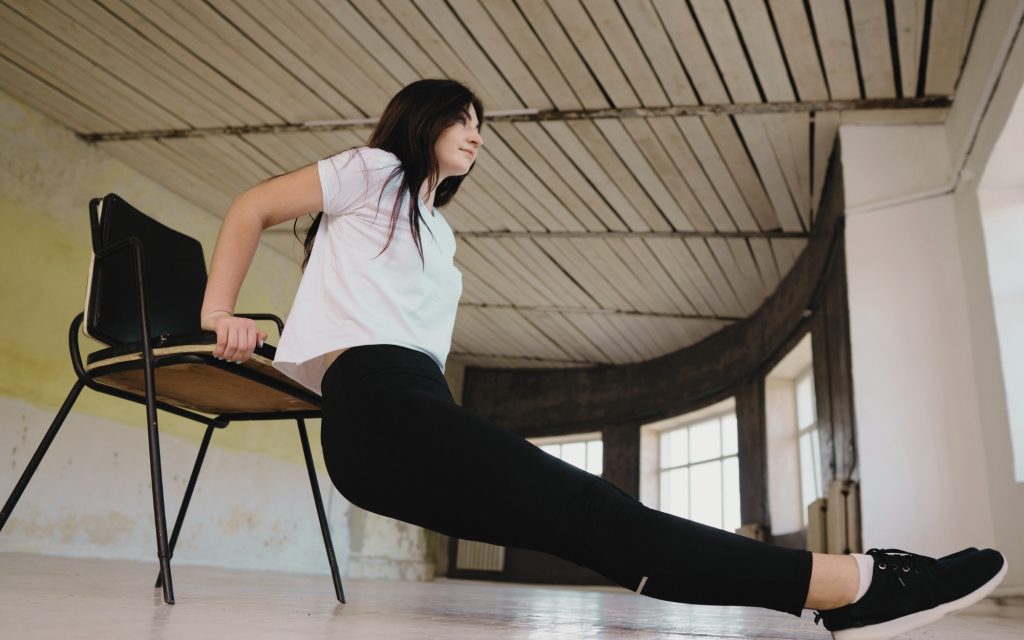
A gym membership averages $40–70 a month and for a lot of people, that recurring cost is the single biggest barrier between them and consistent strength training. Here’s the good news: building muscle without a gym membership isn’t a compromise, it’s just a different set of tools. Your muscles don’t respond to the logo on the equipment; they respond to resistance, effort, and progressive challenge, all of which you can create with your own bodyweight, a set of resistance bands, and a doorway pull-up bar. In this guide, we’ll walk through exactly what minimal equipment is worth buying (and in what order), the six movement patterns every muscle-building program needs, a complete low-cost 3-day training plan, and how to keep progressing for months without spending another dollar.
Key Takeaways
- You can build muscle without a gym membership. Bodyweight movements, resistance bands, a pull-up bar, and inexpensive household equipment can provide enough resistance to stimulate muscle growth when your training progressively gets harder. Fitbod specifically identifies more reps, harder variations, slower tempos, shorter rest periods, and added sets as ways to progressively overload bodyweight training.
- You don’t need an elaborate home gym. A bodyweight-only setup costs nothing, while resistance bands and a pull-up bar can dramatically expand your exercise options without the recurring cost of a gym membership. Fitbod notes that resistance bands are portable, inexpensive, and capable of increasing the intensity of bodyweight movements.
- Consistency and progression matter more than equipment variety. Fitbod recommends progressively challenging your muscles and training major muscle groups multiple times per week rather than simply repeating the same easy workout.
- Tracking matters. Fitbod uses training history, available equipment, performance, recovery, sets, reps, estimated strength, and other inputs to adapt workouts over time. Fitbod draws on data from more than 100 million logged workouts and includes more than 1,600 exercises.
- Recovery and nutrition are part of the program. Muscle-building progress doesn’t only happen during your workout. Adequate recovery, sleep, protein, and overall nutrition help support adaptation between sessions.
1. Can You Really Build Muscle Without a Gym?
Yes. You can build muscle without a gym membership as long as your muscles receive enough resistance, training volume, and progressive overload to keep adapting.
A commercial gym makes progressive resistance convenient. It gives you racks, barbells, dumbbells, cables, and machines that allow you to increase weight in small increments.
Convenient doesn’t mean necessary.
Push-ups, split squats, lunges, pull-ups, inverted rows, dips, glute bridges, and dozens of other exercises can challenge the same fundamental movement patterns you would train in a gym.
Fitbod’s guide to building muscle with bodyweight exercises recommends several strategies for making these movements progressively harder, including:
- Increasing repetitions
- Decreasing rest periods
- Using more difficult exercise variations
- Training closer to failure
- Increasing time under tension
- Using mechanical drop sets
The question isn’t simply, “Do I have weights?” A better question is: “Is the exercise difficult enough that my muscles need to adapt?”
For beginners, bodyweight training can provide a significant stimulus. Beginners may experience improvements in muscle growth and strength from bodyweight movements and more experienced lifters can manipulate variables such as exercise difficulty and training frequency to increase the challenge. In other words, your muscles don’t know whether you’re training in a $100-per-month gym or beside your couch. They respond to the demands you place on them.
2. Start With the Minimum Equipment You Actually Need
One advantage of training at home is that you don’t need to recreate an entire commercial gym.
Level 1: $0 Bodyweight Setup
You can train your:
- Chest with push-ups
- Shoulders with pike push-ups
- Triceps with close-grip push-ups
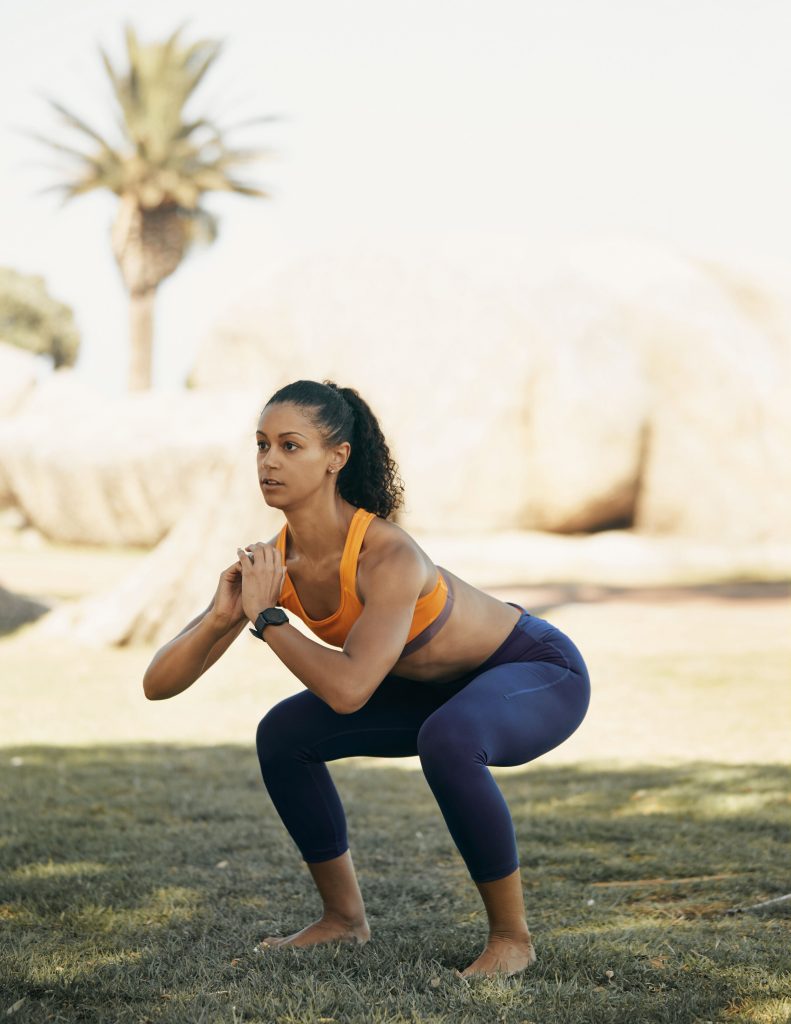
- Quads with squats and split squats
- Glutes with lunges and glute bridges
- Hamstrings with sliding leg curls or single-leg bridges
- Core with planks, dead bugs, and mountain climbers
Fitbod’s bodyweight exercise programming highlights push-ups, squats, pull-ups, dips, lunges, pike push-ups, glute bridges, inverted rows, planks, Bulgarian split squats, and other movements as the foundation of full-body bodyweight strength training.
Level 2: Add Resistance Bands
When you’re ready to spend a little money, resistance bands offer one of the best equipment-to-cost ratios. Bands are lightweight, portable, inexpensive compared with traditional weights, and can make existing bodyweight exercises more difficult. For example, a band can be added to a push-up to increase resistance as you press away from the floor.
Level 3: Add a Pull-Up Bar
Pulling exercises can be harder to replicate without equipment. A doorway pull-up bar solves much of that problem by adding:
- Pull-ups
- Chin-ups
- Negative pull-ups
- Isometric holds
- Hanging core work
Fitbod recommends a pull-up bar as one of the most impactful additions to a basic bodyweight setup. You can build an effective setup gradually rather than spending hundreds or thousands of dollars upfront.
3. Build Your Program Around Progressive Overload
If there’s one principle that determines whether your inexpensive home workout remains productive, it’s progressive overload. Progressive overload means gradually increasing the challenge your muscles must overcome.
At a gym, that could mean moving from 100 pounds to 105 pounds.
At home, it might mean:
- Week 1: 10 push-ups
- Week 2: 12 push-ups
- Week 3: 15 push-ups
- Week 4: 12 slower-tempo push-ups
- Week 5: feet-elevated push-ups
Overload can come from more than adding weight. Increasing reps, adding sets, slowing the tempo, reducing rest, or choosing a more challenging exercise variation can all increase training difficulty.
Fitbod’s data also illustrates why effort and progression matter. According to an analysis published by Fitbod Head of Data Science Thiago Marzagão using 148 million logged sets over three years, users who consistently produced more effort showed greater strength progression. Fitbod reported that 20% more effort corresponded with a 15% strength gain, while 40% more effort corresponded with a 23% strength gain. Users pushing harder also recorded a 25% increase in strength over five sessions versus 7% among low-effort users.
That doesn’t mean every set should be an all-out test, it means your training needs to continue challenging you. Once 20 normal squats feel easy, performing the same 20 squats indefinitely is unlikely to be your best route to continued growth. You could instead progress to slower squats, paused squats, split squats, Bulgarian split squats, or band-resisted variations.
4. Use the Right Exercises for Maximum Muscle
When equipment is limited, prioritize exercises that train a large amount of muscle and are easy to progress. An effective, low-cost program should include these six categories:
1. Horizontal Push
Examples:
- Push-up
- Incline push-up
- Decline push-up
- Close-grip push-up
- Band-resisted push-up
2. Vertical Push
Examples:
- Pike push-up
- Feet-elevated pike push-up
- Resistance band shoulder press
3. Pull
Examples:
- Pull-up
- Chin-up
- Inverted row
- Band row
- Band pulldown
4. Squat
Examples:
- Bodyweight squat
- Split squat
- Bulgarian split squat
- Reverse lunge
- Band-resisted squat
5. Hip/Hinge
Examples:
- Glute bridge
- Single-leg glute bridge
- Hip thrust
- Sliding hamstring curl
- Band Romanian deadlift
6. Core
Examples:
- Plank
- Side plank
- Dead bug
- Mountain climber
- Resistance band Pallof press
You don’t need 30 exercises in every workout. A smaller group of movements that you consistently track and progressively improve can be far more useful than constantly changing exercises.
5. Follow This Low-Cost 3-Day Muscle-Building Program
For most people looking to build muscle at home, three full-body sessions per week are a practical starting point. Fitbod’s programming notes that training major muscles multiple times per week can help distribute productive weekly volume, while three to four weekly bodyweight sessions can provide a foundation for measurable strength progress.
Workout A
| Exercise | Sets | Reps |
|---|---|---|
| Push-Up | 3 | 8-15 |
| Bulgarian Split Squat | 3 | 8-15/leg |
| Band Row or Inverted Row | 3 | 8-15 |
| Single-Leg Glute Bridge | 3 | 10-15/leg |
| Pike Push-Up | 2-3 | 6-12 |
| Plank | 3 | 30-60 sec |
Workout B
| Exercise | Sets | Reps |
|---|---|---|
| Pull-Up, Negative Pull-Up or Band Pulldown | 3 | 5-12 |
| Reverse Lunge | 3 | 8-15/leg |
| Close-Grip Push-Up | 3 | 8-15 |
| Sliding Hamstring Curl | 3 | 8-15 |
| Band Lateral Raise | 2-3 | 12-20 |
| Dead Bug | 3 | 8-15/side |
Workout C
| Exercise | Sets | Reps |
|---|---|---|
| Feet-Elevated or Standard Push-Up | 3 | 8-15 |
| Bodyweight or Band-Resisted Squat | 3 | 10-20 |
| Chin-Up or Band Row | 3 | 6-15 |
| Single-Leg Hip Thrust | 3 | 8-15/leg |
| Pike Push-Up | 2-3 | 6-12 |
| Side Plank | 3 | 20-45 sec/side |
A Monday-Wednesday-Friday or Tuesday-Thursday-Saturday schedule works well because it naturally puts recovery time between full-body sessions. These rep ranges aren’t rigid rules, your goal is to use a variation that makes the working set genuinely challenging while still allowing you to maintain good form.
6. Make Bodyweight Exercises Harder Before Buying More Equipment
A common home-training mistake is assuming that once an exercise feels easy, it’s time to buy weights. Often, you simply need a better progression. Here are seven inexpensive ways to increase difficulty:
1. Add Reps
Move from 8 push-ups toward 10, 12, or 15.
2. Add a Set
Progress from three sets to four when appropriate.
3. Slow the Lowering Phase
Instead of dropping quickly into a squat, take three or four seconds to descend.
4. Pause
Hold the hardest position for one or two seconds.
5. Increase Range of Motion
Examples include deficit push-ups or deeper split squats when you can perform them safely and with control.
6. Use One Limb
A two-leg squat distributes your bodyweight between both legs. Split squats and other unilateral movements shift considerably more demand onto one side. Fitbod recommends unilateral bodyweight exercises as one method of increasing the stress placed on the working muscles.
7. Upgrade the Variation
Think: Incline push-up → push-up → decline push-up → archer push-up
or:
Squat → split squat → Bulgarian split squat → assisted single-leg squat
This progression ladder can keep a no-gym program challenging for considerably longer than many people expect.
7. Train Each Muscle Frequently Enough to Grow
More isn’t automatically better, but doing a few random sets once a week isn’t an ideal muscle-building strategy either.
Fitbod recommends training most muscle groups roughly two to three times per week, with weekly volume spread across sessions instead of crammed into one enormous workout. A target range of approximately 10-20 working sets per muscle group per week, depending on the individual and program.
Beginners don’t need to jump immediately to the top of that range. Start with a manageable amount of hard training and build from there. Your weekly progression could look like:
- Weeks 1-2: Learn the movements and establish consistent training.
- Weeks 3-4: Add reps where exercises have become easier.
- Weeks 5-6: Introduce harder variations or bands.
- Weeks 7-8: Add selected sets where additional volume is needed.
Progress gradually enough that you’re improving without creating so much fatigue that the next workout suffers.
8. Eat Enough Protein Without Overspending
Training provides the stimulus for muscle growth. Nutrition provides the raw materials and energy your body needs to support the process. You don’t need premium supplements or expensive “fitness foods.” Affordable protein staples include:
- Eggs
- Milk
- Greek yogurt
- Cottage cheese
- Canned tuna
- Chicken thighs
- Ground meat purchased in bulk
- Beans
- Lentils
- Tofu
- Frozen fish
- Peanut butter
- Whey protein when the cost per serving makes sense
A daily protein range of roughly 1.4-2.0 grams per kilogram of bodyweight for building and maintaining muscle mass. For a 180-pound person about 82 kilograms that range would be approximately 115-164 grams of protein per day. Don’t let perfect meal planning become another expensive barrier. A repeatable combination of affordable staples can support muscle-building just as effectively as a kitchen full of premium products.
9. Prioritize Recovery Instead of Adding More Workouts
Your muscles don’t grow because you trained them again. Training creates a stimulus. Recovery gives your body the opportunity to adapt to that stimulus. Muscle recovery is a critical part of progress and uses a muscle-by-muscle recovery model to help inform subsequent workout recommendations.
Sleep matters, too. Fitbod’s muscle-building guidance recommends approximately 7-8 hours or more per night to support recovery and performance. If your performance suddenly drops, soreness remains unusually high, or the same workout is becoming harder rather than easier, doing even more work isn’t necessarily the solution. Recovery is part of the program, not time away from it.
10. Track Your Workouts So You Know You’re Improving
Home workouts can fail for a surprisingly simple reason: People don’t remember what they did.
You perform “some push-ups,” “some squats,” and “a few bands” three times a week but never establish whether you’re actually progressing.
Track:
- Exercise
- Variation
- Sets
- Reps
- Resistance
- Tempo when relevant
- Effort
- Workout frequency
If you performed:
Push-up: 3 × 10 last week and Push-up: 3 × 13 this week with comparable technique, you have a measurable sign of progress. This is also where personalized training tools can reduce guesswork.
Fitbod uses factors like goals, fitness level, training history, muscle freshness score, available equipment, and workout duration when generating and adapting workouts. The app tracks workout variables such as sets, reps, weight, estimated strength, and recovery across sessions. Fitbod also reports that its system draws from more than 100 million logged workouts and includes an exercise library of more than 1,600 exercises with demonstration videos.
For home training specifically, Fitbod allows users to select body weight only as their available equipment and generates workouts around that constraint. That means your program can evolve without requiring your equipment budget to evolve at the same speed.
11. Upgrade Your Home Setup Strategically
When you eventually spend money, buy equipment that solves a specific limitation. A sensible upgrade order could look like:
Step 1: Resistance bands
Adds scalable resistance to pushing, pulling, leg, arm, shoulder, and core movements.
Step 2: Pull-up bar
Makes vertical pulling significantly easier to program.
Step 3: Adjustable dumbbell or kettlebell
Adds external load without requiring an entire rack of weights.
Step 4: Second adjustable weight
Expands bilateral movements and loading possibilities.
Step 5: Bench or suspension trainer
Adds exercise variety if you have the space and budget.
Avoid buying equipment because a home gym looks incomplete without it. Your training setup only needs to answer one question: Can I continue making my exercises progressively challenging? If the answer is yes, you probably don’t need another purchase yet.
Frequently Asked Questions
- Can you build muscle without going to the gym? Yes. Bodyweight exercises and inexpensive resistance equipment can build muscle when exercises are sufficiently challenging and become progressively harder over time. Fitbod recommends manipulating reps, sets, tempo, rest periods, exercise variations, and resistance to create progressive overload outside a traditional gym.
- Can you build muscle with only bodyweight exercises? Yes, particularly for beginners and intermediate trainees. As you get stronger, however, you’ll need to progressively increase the difficulty. That can mean harder variations, unilateral exercises, slower tempos, additional reps, or external resistance such as bands.
- What is the cheapest equipment for building muscle at home? You can begin with no equipment at all. If you want to expand your options, resistance bands and a pull-up bar provide substantial exercise variety for a relatively small one-time investment. Fitbod suggests bands because they are portable and inexpensive compared with traditional free weights.
- How many days per week should I train to build muscle at home? Three full-body workouts per week are a practical starting point for many people. More broadly, Fitbod recommends structuring training so major muscles receive productive work multiple times each week while still getting sufficient recovery.
- How many sets should I do to build muscle? Training needs vary by experience, intensity, recovery capacity, and other factors. Fitbod’s current training-engine guidance describes approximately 10-20 working sets per muscle group per week as a useful muscle-building range, with volume distributed across sessions. Beginners can start toward the lower end and progress gradually.
- Do I have to train to failure to build muscle without weights? Not every set needs to reach failure. The goal is to make your working sets sufficiently challenging while maintaining good technique. Fitbod recommends hard sets and notes that training intensity and proximity to failure are important considerations.
- How do I progressively overload if I don’t have heavier weights? Add repetitions, sets, range of motion, pauses, slower tempos, resistance bands, shorter rest periods, or harder exercise variations. Fitbod recognizes these approaches as ways to create overload without simply adding more weight.
- Can resistance bands really build muscle? Yes. Fitbod notes that resistance bands can increase exercise intensity and be used as part of a progressive-overload approach by gradually increasing reps, sets, resistance, or exercise difficulty.
- How can Fitbod help if I don’t own gym equipment? Fitbod lets you configure workouts around your available equipment including a body weight only setting and uses your training history, goals, recovery, performance, and other factors to generate personalized workouts.
Final Thought
Building muscle isn’t reserved for people with barbells, squat racks, or monthly gym dues. What your muscles ultimately need is a reason to adapt: enough challenging resistance, sufficient training volume, progressive overload, adequate nutrition, and time to recover. Start with the equipment you already have – your body. Master push-ups, rows, squats, lunges, hinges, presses, and core movements. Add repetitions. Slow the tempo. Progress to harder variations. Introduce a resistance band or pull-up bar when those purchases solve a real training limitation. Most importantly, track what you do and make the program incrementally harder.
Fitbod’s own training approach is built around that same idea: workouts should adapt as your performance, recovery, equipment, and training history change. With data drawn from more than 100 million logged workouts and millions of individual training decisions, Fitbod is designed to make that progression easier to manage whether you’re training in a fully equipped gym or with nothing more than a living-room floor. You don’t need a gym membership to start building muscle. You need a program you can follow, progression you can measure, and enough consistency to give it time to work.